How to Become a CNA in 3 Easy Steps: Training, Exam, Cost (2026)
See if you qualify for Certified Nursing Assistant programs
Answer a few questions in 2 minutes. Free, no commitment.
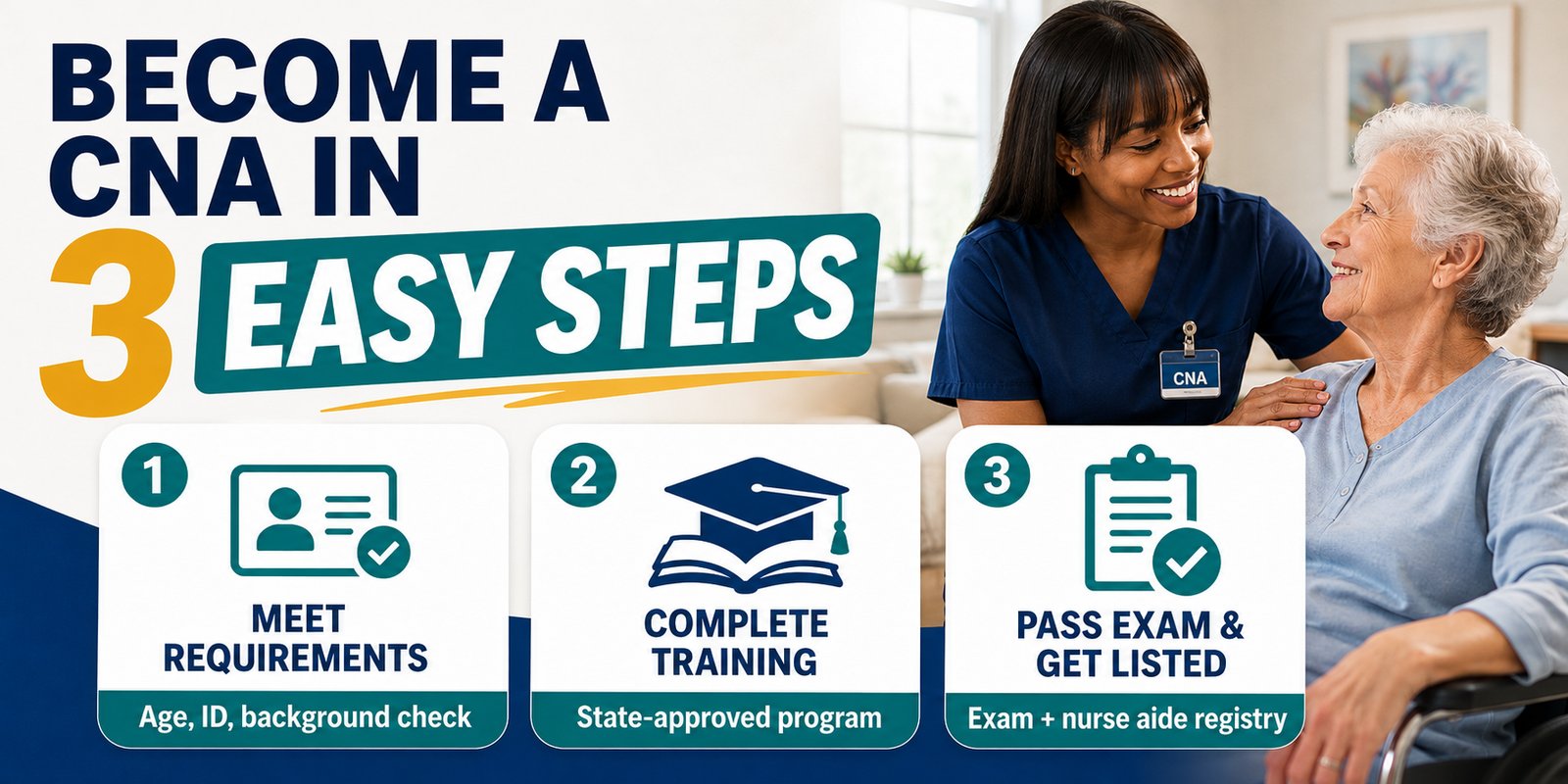
Becoming a CNA takes three steps in every state: finish a state-approved training program, pass a two-part competency exam, and get listed on your state's nurse aide registry. Most people move through all three in 4 to 16 weeks, which makes this one of the quickest entries into paid healthcare work. Nursing assistants earned a median of $42,260 a year, about $20.32 an hour, as of May 2025, with entry positions starting near $33,946.
The steps are simple to name and real to do: the training runs at least 75 federally required hours, the exam makes you perform five skills while an evaluator watches, and the details shift state by state. The surprise for most people is the high school diploma. You may not need one to start.
CNA Salary and Job Outlook
Nursing assistants earned a median of $42,260 a year, $20.32 an hour, in May 2025 BLS-sourced data. Entry positions start near $33,946 and experienced aides reach about $51,979, with government facilities and hospitals generally at the top of the range.
The BLS projects 2% employment growth for nursing assistants from 2024 to 2034, yet about 211,800 openings a year, because turnover rather than growth drives this field's hiring. For the deeper cut by state and setting, see how much a CNA makes.
Frequently Asked Questions
Can you become a CNA without a high school diploma?
Often, yes. Federal rules set no diploma requirement, and many programs accept proof of eighth-grade reading and math instead; Williams Career School of Excellence, featured above, admits students without a diploma or GED. Community college programs are the usual exception, so check the admissions line before assuming.
What is the easiest way to become a CNA?
The shortest supported path is a full-time program at a trade school, where the featured options run 15 days to 5 weeks, followed by the soonest exam date you can book. If cost matters more than speed, facility-sponsored training can bring tuition to zero in exchange for working where you trained.
How do I start off as a CNA once certified?
Your registry listing is the credential employers check, so the search starts the day it posts. Nursing care facilities employ the largest share of CNAs, which makes long-term care the most common first stop, and hospital postings often ask for experience first. Apply directly to nursing homes and assisted living facilities near you. A large share of the roughly 211,800 yearly CNA openings sit in those buildings.
Can a CNA do a blood glucose test?
In many states yes, as a delegated task under nurse supervision, often after facility training on the specific meter. State rules differ on exactly which tasks nurse aides may perform, so the reliable answer lives in your state registry's allowed-tasks list rather than in any national rule.
How do I transfer my CNA certification to another state?
Certify in one state first, then apply for reciprocity or endorsement through the new state's nurse aide registry, which typically asks for a current listing in good standing and a short application. Requirements and fees vary, so start with the registry website of the state you are moving to.
Starting Your CNA Career This Year
Three steps: a 75-plus-hour program you can finish inside four months even part-time, one exam covering five skills you will have practiced long before test day, and a registry listing that makes you hireable across your state. The word for that is not easy. It is doable, which is better.
When you are ready, compare CNA programs on Dreambound, weigh the published prices against the free routes, and pick the start date that makes this the year you work in scrubs.