Radiology Technician Classes Near Me in Albany
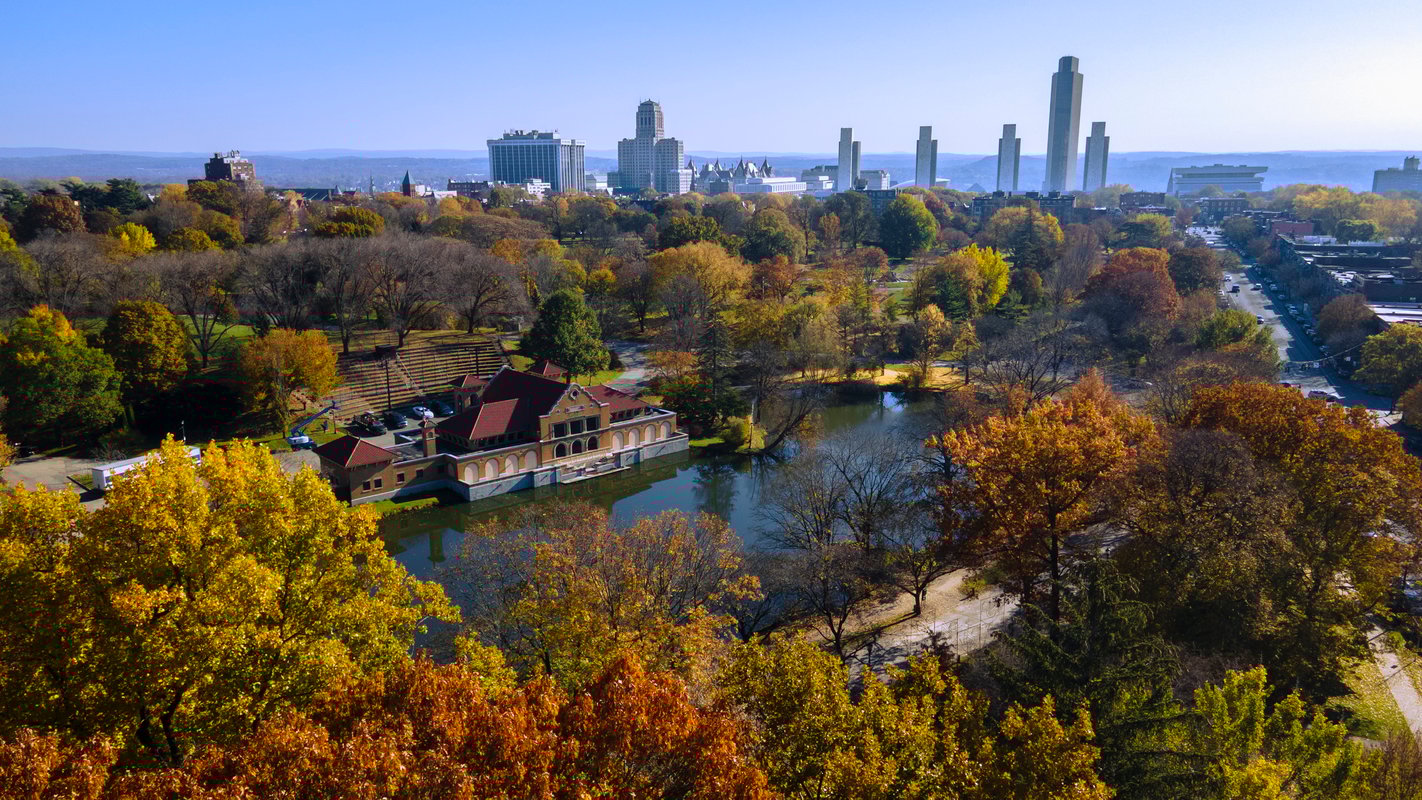
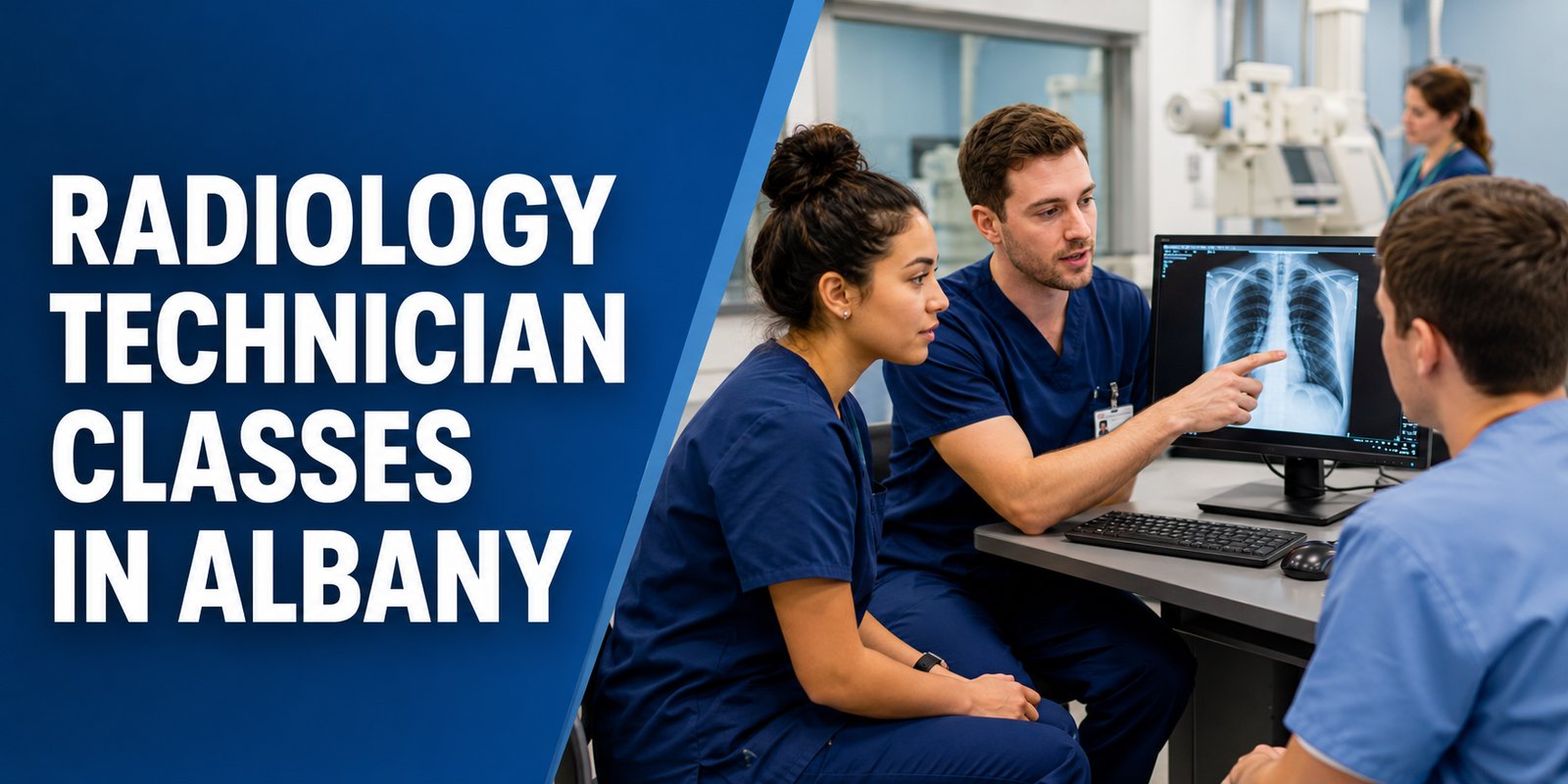
To work as a radiologic technologist in Albany, New York, you need more than a national credential. New York is one of the states that requires its own license, so the path runs through an accredited program, the ARRT exam, and a license from the state Department of Health. It tends to pay off, since New York's median wage for the role is $98,470 a year, roughly $18,360 above the national median. The Capital Region has accredited training close to home, and most programs take about two years to finish. Here is how the programs, the New York license, and the pay fit together for Albany students.
Key Points
- New York requires a state license to work as a radiologic technologist, issued by the state Department of Health on top of the national ARRT credential.
- The standard route is a two-year accredited associate degree, then the ARRT exam, then the New York license, which usually adds up to about two years total.
- Hudson Valley Community College in Troy runs an accredited radiography program, and Maria College in Albany launched a new one in 2025.
- Radiologic technologists in New York earn a median of $98,470 a year, about $18,360 above the national median.
- New York has no limited-scope or one-year x-ray operator shortcut, so general imaging work requires the full license.
Radiology Tech Programs in the Albany Area
The Albany area has accredited radiologic technology training, and the standard route is a two-year associate degree that leads to the ARRT exam and a New York license. Hudson Valley Community College in Troy offers an associate program accredited by the Joint Review Committee on Education in Radiologic Technology, known as JRCERT, which combines classroom science with supervised clinical hours. Maria College in Albany launched its own radiologic technology associate degree in 2025, with clinical training at Albany Medical Center; as a new program, it is working toward JRCERT accreditation rather than holding it yet.
Both run about two years, and tuition and start dates change often, so the fastest way to compare current options is on Dreambound. If cost and speed are your main concern, look at the cheapest and fastest radiology technician programs, and to see what is available around the Capital Region, browse radiology technician classes near you.
New York Requires a License to Work as a Radiologic Technologist
New York does not let you take diagnostic X-rays on the ARRT credential alone. The state requires a license from the New York State Department of Health, issued through its Bureau of Environmental Radiation Protection, in one of three categories: radiography, radiation therapy, or nuclear medicine. This is the step most guides skip, and it is the one that actually clears you to work in the state.
To get licensed, you finish an accredited program, pass the national ARRT exam, a $225 test that earns the R.T.(R) credential, and then apply to the state. New York accepts the ARRT exam, so there is no separate state test, and the license application runs $120. After that, you keep the license active with continuing education, 48 credit hours over each four-year registration cycle, with the registration renewing on your birthday.
One point trips up people searching for a quick x-ray route: New York has no limited-scope or one-year x-ray operator license for general medical imaging. Aside from narrow exceptions in dental and podiatric offices, only licensed radiologic technologists can position patients and apply radiation, so the full license is the only path to general imaging work in the state.
Taking Radiology Tech Classes Online in the Albany Area
You can take some radiologic technology coursework online, but not the whole program. The lecture side, anatomy, physics, patient care, and imaging theory, runs online or in a hybrid format at some schools, yet the clinical rotations that qualify you for the ARRT exam have to happen in person at a healthcare facility. There is no fully online path to becoming a licensed radiologic technologist, because the registry requires real supervised imaging hours.
For programs that keep the coursework remote while arranging clinical placement nearby, Dreambound's online radiology technician classes show which options fit that pattern.
Radiologic Technologist Salary in Albany and New York
Across New York, radiologic technologists earn a median of $98,470 a year, or $47.34 an hour, about $8,206 a month, as of May 2025. That is roughly $18,360 above the national median, which puts New York among the better-paying states for the role. That figure is a statewide median lifted by downstate markets, so a technologist's earnings in the Capital Region depend on the employer, the shift, and years of experience.
The Albany area's major health systems are where most of the imaging work sits. Albany Medical Center, St. Peter's Health Partners, Ellis Medicine in Schenectady, Samaritan Hospital in Troy, and Saratoga Hospital all run diagnostic imaging across the region, alongside outpatient centers and specialty clinics. Nationally, the field is projected to grow about 4 percent through 2034, and pay climbs with specialized modalities like CT and MRI. If you are comparing radiologic technology with another way into healthcare, the CNA versus radiology technician guide lays out the difference in training length, pay, and daily work.
Frequently Asked Questions
How long does it take to become a radiology tech in New York?
About two years. The standard route is a two-year accredited associate degree in radiography, followed by the ARRT exam and your New York license application. Building in time to pass the exam and process the state license, most people are working within a few months of finishing the program.
Does Albany have a radiology program?
Yes. Hudson Valley Community College in Troy offers an accredited radiologic technology associate degree, and Maria College in Albany added its own program in 2025 with clinical training at Albany Medical Center. Both lead toward the ARRT exam and the New York license.
How much do radiology techs make in Albany, NY?
New York's median wage for radiologic technologists is $98,470 a year, about $18,360 above the national median, though that statewide figure is lifted by downstate markets. In the Capital Region, actual pay depends on the employer, the setting, and your experience and modality certifications.
Who gets paid more, an MRI tech or a radiology tech?
MRI technologists usually do. Their national median sits near $88,000 a year, while general radiologic technologists are closer to $80,000. Because MRI is a modality most people add after qualifying in general radiography, the higher pay tends to come later, once you specialize, rather than at the start.
Is there a faster or x-ray-only path to work in radiology in New York?
Not for general medical imaging. New York does not offer a limited-scope or one-year x-ray operator license the way some states do, so you cannot skip the full program. Outside of narrow dental and podiatric roles, only a licensed radiologic technologist can perform diagnostic imaging in the state, which makes the two-year path the realistic route.
Getting Started in Radiology in Albany
Albany is a strong place to start this career, but the New York license is the piece to plan around from day one. Choose an accredited program, keep the ARRT exam and the state license in view as you go, and remember that the license, not just the national credential, is what lets you work in New York.
Once you know which program fits your schedule and budget, compare radiologic technology options around the Capital Region on Dreambound, and confirm any program is accredited before you commit, since that accreditation is what carries you to the ARRT exam and your state license.