Online Radiology Technician Classes
See if you qualify for Radiology Technician programs
Answer a few questions in 2 minutes. Free, no commitment.
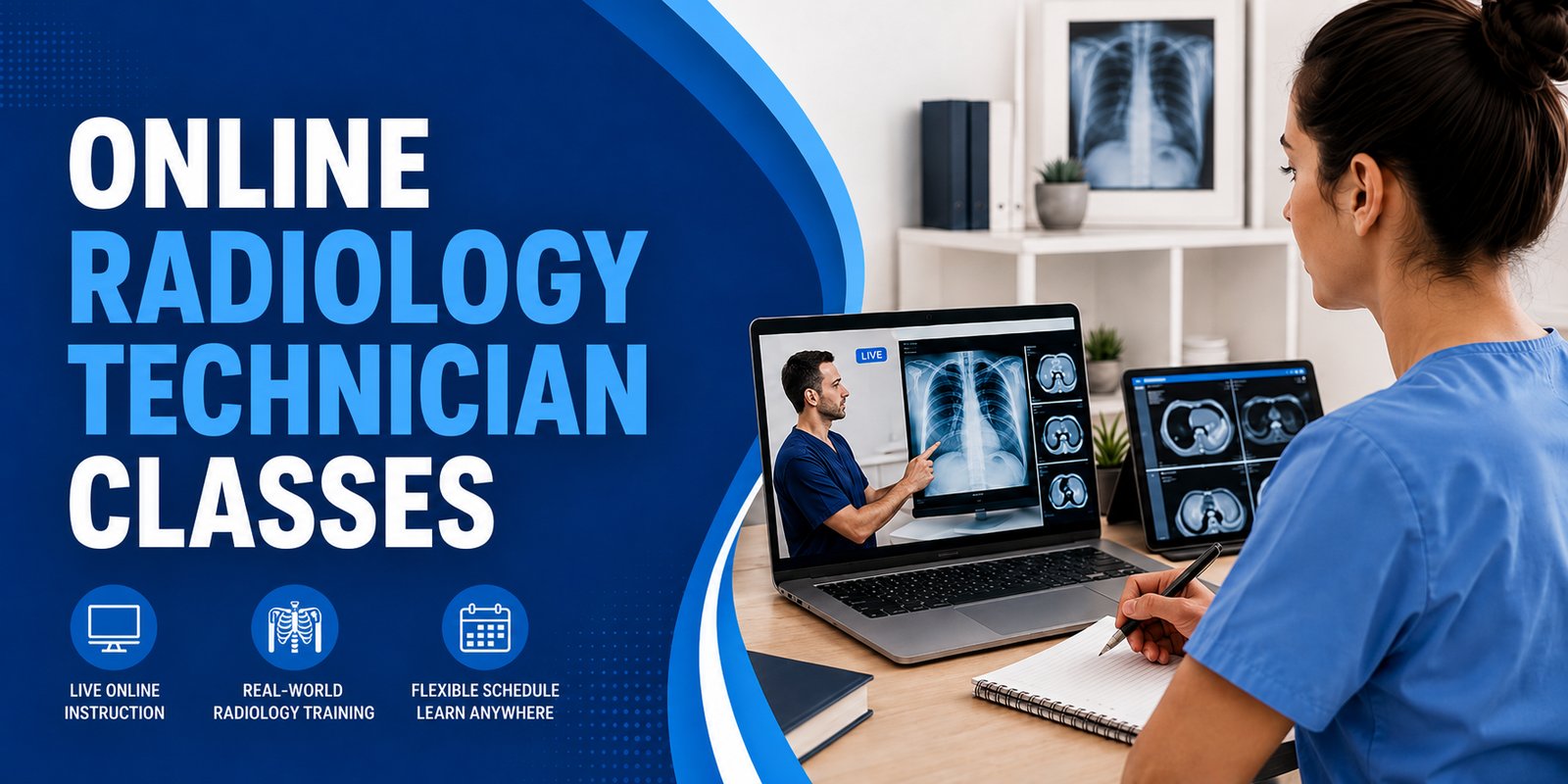
You can take radiology technician classes online, but you cannot become certified fully online. Accredited programs use a hybrid model: you complete coursework like anatomy, imaging physics, and radiation safety online, then finish required hands-on clinical training in person at a healthcare facility. Fully online training does not exist for beginners because operating imaging equipment and positioning patients are skills you can only build in a real clinical setting. Below is what online classes cover, what they don't, and how to choose an accredited hybrid program.
How to Choose an Online Radiology Technician Program
A few things separate a program worth your money from one that wastes it. Look for:
- Accreditation: JRCERT for a degree, or ARRT-recognized for limited scope. This is non-negotiable for certification.
- Clinical placement support: the program should help arrange your in-person rotations, not leave you to find them alone.
- Transparent cost: clear tuition, fees, and clinical expenses upfront.
- Strong outcomes: ask about graduation and ARRT exam pass rates.
- Student support: advising, tutoring, and technical help for the online portion.
The biggest mistake to avoid: confusing a general online "radiology course" with an accredited program. Course libraries can teach you concepts, but only an accredited program leads to ARRT certification and a license to work. If you are unsure about a program, you can verify its accreditation directly on the JRCERT find-a-program directory before you enroll.
Radiology Technician Salary and Job Outlook
The BLS reports a median annual wage of $77,660 for radiologic technologists and technicians as of May 2024, about $37.34 per hour. The lowest 10% earned less than $52,360, and the top 10% earned more than $106,990.
BLS projects about 4% employment growth from 2024 to 2034, with thousands of openings each year, driven by an aging population and growing use of diagnostic imaging. Adding credentials in CT, MRI (median $88,180), or mammography is a common way to earn more.
Frequently Asked Questions
Can you get your radiology technician credential online?
You can complete the coursework portion online, but you cannot become certified without finishing in-person clinical training and passing the ARRT exam. Every accredited program is hybrid for this reason, no accredited program is 100% online for beginners.
How do you learn radiology online?
You learn the academic side, anatomy, radiation safety, imaging physics, and patient-care principles, through a program's online platform, often with virtual simulation to practice positioning. The hands-on skills still require in-person clinical rotations at an approved facility.
What is the fastest way to become a radiologic technologist?
A limited-scope certificate is the quickest accredited route, often around 8 months, and it prepares you for a narrower x-ray role rather than the full credential. If you want full ARRT certification, an associate degree is the standard path, and choosing a program with frequent start dates can shave off waiting time.
How long is a radiology technician course?
Length depends on the credential. A full associate degree runs 16 to 24 months including clinical hours, while a limited-scope certificate is shorter at roughly 8 months. Studying part time, or waiting for a clinical placement, can extend either one.
What is the difference between online radiology courses and an accredited program?
Online radiology courses on general learning platforms teach concepts but do not lead to certification. An accredited program (JRCERT for a degree) combines online coursework with required clinical training and qualifies you to sit for the ARRT exam. Only the accredited route lets you work as a certified technician.
Is an Online Radiology Technician Program Right for You?
An online or hybrid program is a strong option if you need flexibility for the academic side and can commit to in-person clinical hours near you. It is not a shortcut around hands-on training, which remains required for certification and safe practice. If that trade-off works for your schedule, the next step is finding an accredited program.
Compare accredited online and hybrid radiology technician programs by format, length, and cost on Dreambound to find one that fits your timeline and your state's requirements.