EKG Technician Program Cost: Cheapest and Fastest Options in 2026
See if you qualify for Electrocardiogram (ECG/EKG) programs
Answer a few questions in 2 minutes. Free, no commitment.
EKG Technician Program Cost: Cheapest and Fastest Options in 2026
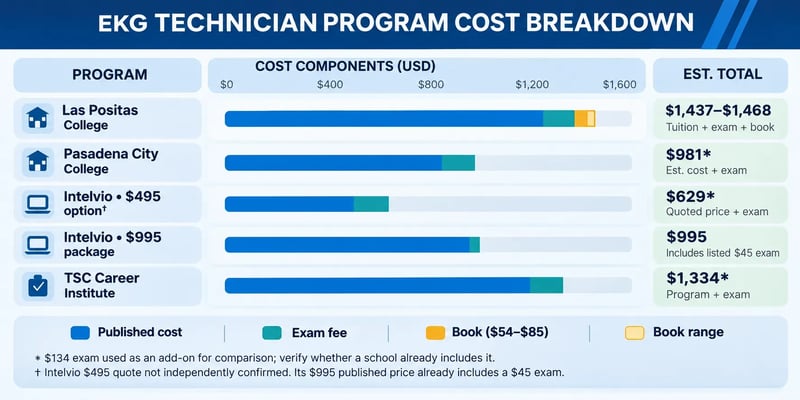
EKG technician program cost usually runs about $500 to $2,000, and programs that add an externship can reach about $4,100. The certification exam adds another $119 to $175 unless tuition includes it, so the total matters more than the sticker price.
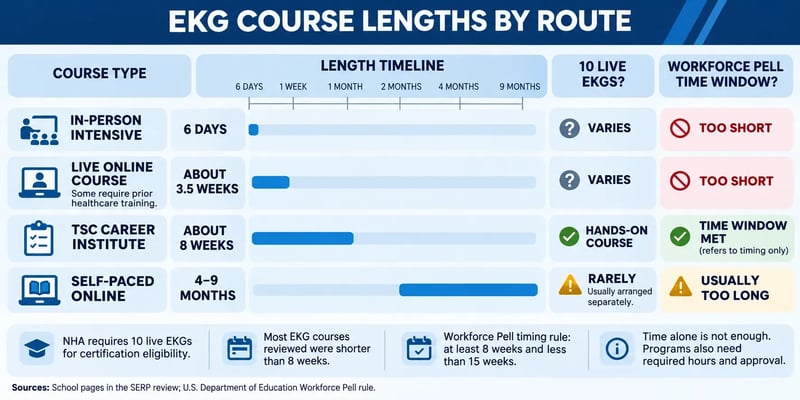
The fastest courses are short, scheduled classes that finish in six days to about eight weeks, while self-paced online courses usually take four to nine months. Before you count a course as finished, check whether it includes the 10 live EKGs that NHA's CET certification requires. Cardiovascular technologists and technicians, the group that includes EKG techs, earned a median of $74,310 in May 2025, though entry-level EKG work pays well below that.
EKG Technician Salary and Job Outlook
Cardiovascular technologists and technicians, the BLS group that includes EKG techs, earned a median of $74,310 in May 2025. That median includes higher-paid technologists, so entry-level EKG pay sits closer to the group's lower end: the lowest 10% earned under $39,000.
Job boards land in between. ZipRecruiter shows an average of $49,724 a year, or $23.91 an hour, for EKG technicians (November 2026), with the middle half of salaries running from $38,000 to $55,000.
BLS projects 4% growth from 2025 to 2035, with about 3,400 openings a year. Hospitals employ 77% of the group. Student interest is climbing as well: EKG technician training grew 83% year over year in Dreambound's 2025 Student Choice and Interest Report, making it the fastest-growing program category nationwide. If you are weighing this path against nursing assistant work, our CNA vs EKG comparison sets the two side by side.
Frequently Asked Questions
Are there free EKG courses?
Free online lessons exist, but they do not include the live EKGs certification requires. The realistic free routes are WIOA funding through an American Job Center and hospital monitor technician programs that pay you while you train. Those hospital programs can come with strings attached; BJC's, for example, asks for a one-year work commitment.
Can you get EKG certified online?
You can take the coursework online, but the NHA exam requires 10 EKGs on live people, so online courses pair with an externship or local practice. Self-paced online courses usually take four to nine months. Compare online EKG classes to see how each handles the hands-on part.
Do you need a degree to become an EKG technician?
No. BLS says EKG technicians may qualify for entry-level jobs with a high school diploma or the equivalent, and certificate programs are generally completed in under a year. Most employers look for a national certification such as the NHA CET.
Is it hard to become an EKG tech?
The coursework is short, since most certificate courses run about 48 to 100 hours. The harder parts are completing the 10 live EKGs NHA requires and passing the exam, which had a 69.66% pass rate in NHA's 2024 data. A course that builds in live-EKG practice takes care of the step online students often have to arrange alone.
Is an EKG technician program worth it?
For many people, yes. A $1,000 to $1,500 course costs less than one month of pay even at the group's 10th percentile of $39,000 a year, and short in-person courses finish in weeks. The trade-off is entry pay well below the group median, which our look at the pros and cons of EKG work covers in more depth.
Choosing a Fast, Affordable EKG Program
The cheapest and fastest EKG path is real, as long as you read the full price tag. A short certificate plus the certification exam typically totals about $600 to $2,200 all in, more with an externship, and an accelerated online program can get you exam-ready in a few weeks. The programs worth paying for name the exam they prepare you for and include the live-patient practice certification requires.
Compare EKG programs on Dreambound by tuition and format, and make sure the one you choose covers the live-EKG practice you need to get certified.