What Is an EKG Technician?
See if you qualify for Electrocardiogram (ECG/EKG) programs
Answer a few questions in 2 minutes. Free, no commitment.
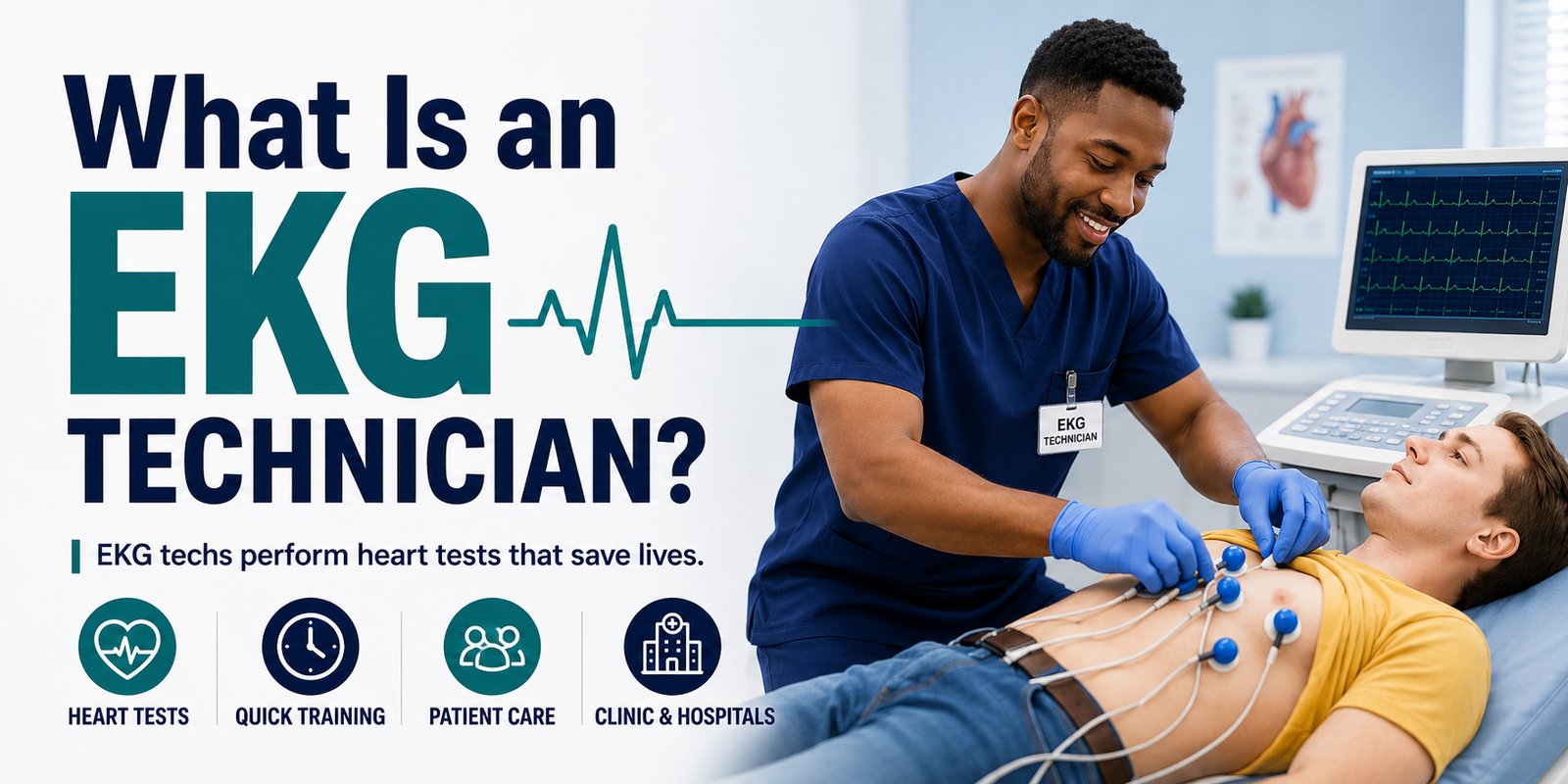
An EKG technician is a healthcare worker who records the heart's electrical activity using a machine called an electrocardiograph. The test, known as an EKG or ECG, helps doctors find heart problems early. The technician prepares the patient, places the sensors, runs the machine, and passes the results to a physician, who interprets them.
EKG stands for electrocardiogram. You will also see it written as ECG, and both refer to the same test. The K comes from the original German spelling, Elektrokardiogramm. If you are new to the field, the rest of this guide walks through what the work is actually like, the cardiac roles it gets confused with, what it really pays, and how to get started.
In Person
ECG - Intelvio, Riverside, CA
A $995 in-person program with hands-on lead placement and live ECG practice. The same curriculum runs at Intelvio's Manteca, National City, and Mission Viejo campuses in California.
If you want broader entry-level skills, Dreambound also lists combined Laboratory Assistant, EKG Technician, and Phlebotomist certificates that bundle EKG training with lab work and phlebotomy and typically take about nine months.
Frequently Asked Questions
What does an EKG technician do?
An EKG technician runs electrocardiogram tests that record the heart's electrical activity. They prep the patient, place electrodes in the 12-lead pattern, operate the machine, check the tracing for quality, and pass the results to a physician. They may also set up Holter monitors and prep patients for stress tests. They do not diagnose or treat.
What does EKG stand for, and is it the same as ECG?
EKG stands for electrocardiogram, and ECG means exactly the same test. EKG comes from the original German spelling, Elektrokardiogramm, while ECG is the English abbreviation. You will see both in job listings and medical settings, so there is no difference in the role or the training.
Are EKG technicians nurses?
No. EKG technicians are not nurses and do not have a nursing scope of practice. They record the heart's electrical activity and route results to physicians. Nurses assess patients, build care plans, give medication, and perform a much broader set of clinical tasks. The two often work side by side in cardiology units but have different training and responsibilities.
How long does it take to become an EKG technician?
Not years. Most EKG training programs take a few weeks to several months, depending on whether they are online, hybrid, or in person and how the schedule is paced. After training, you sit for a national certification such as the CET or CCT. That short timeline is a big part of the role's appeal.
Is being an EKG technician a good job?
It suits people who want patient contact, clear step-by-step tasks, and a quick path into clinical healthcare. The work is non-invasive, training is short, and demand is steady. The trade-offs are honest ones: entry pay often starts in the $39,000 to $48,000 range rather than at the group median, and hospital schedules can include nights and weekends.
What is the difference between an EKG technician and a telemetry technician?
An EKG technician performs the test directly on patients, placing electrodes and capturing readings. A telemetry or cardiac monitor technician watches multiple patients' heart rhythms on screens from a central station and alerts the care team to changes. The training is similar in length, but the daily work is different, so the titles are not interchangeable.
Start Your EKG Technician Path
An EKG technician sits right at the entry point of clinical cardiac care, with a short training path, several certification options, and rising student interest. It is its own profession, separate from nursing and from the deeper procedural work of cardiovascular technologists, with a clear and limited scope.
The first decisions are which certification to aim for and which format fits your week. Compare EKG technician programs on Dreambound to find the credential you want and a schedule that works for you.