Radiology Technician Classes Near Me in Worcester

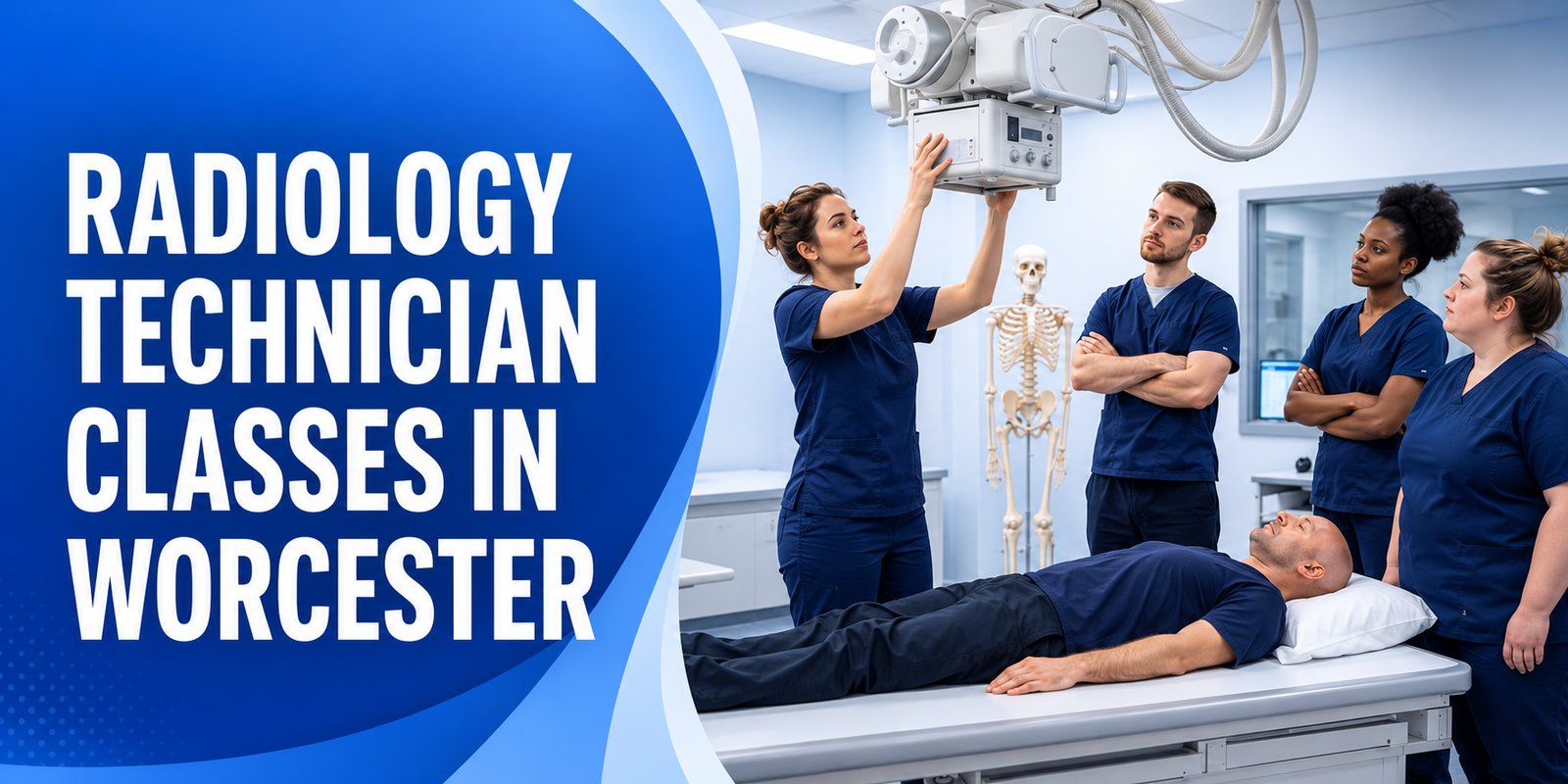
Becoming a radiology technician in Worcester starts with getting into a competitive community-college program and ends with a step many people miss: Massachusetts is one of the states that license radiographers. The path is a JRCERT-accredited associate degree, then the national ARRT exam, then a Massachusetts state license before you can work. It takes about 2 years, admission is the hard part, and the payoff is unusually strong here, because Massachusetts pays radiologic technologists among the highest wages in the country.
Key Points
- Radiography training near Worcester runs through JRCERT-accredited associate-degree programs, with admission that is competitive and points-based.
- Massachusetts requires a state radiologic technologist license from the Department of Public Health, on top of the national ARRT credential.
- ARRT certification is the basis for that license, so you certify nationally first, then license with the state.
- A full radiographer credential takes about 2 years; a limited-scope X-ray credential is shorter but covers only a set list of routine exams.
- Radiologic technologists in Massachusetts earn a median of $103,620 a year, among the highest of any state, with 4 percent job growth projected through 2034.
Getting Into a Radiology Technician Program in Worcester
The hardest part of becoming a radiology technician in Worcester is not the coursework, it is getting a seat. Only a few accredited associate-degree programs serve the Worcester area, and each admits a small class each year against steady demand from the region's hospitals, so they rank applicants on a points-based system that comes down to grades and a placement-exam score, not just a finished application.
Plan on completing your prerequisites first. Most programs want college-level anatomy and physiology, algebra, and English done before you apply, along with a strong grade in biology and a competitive score on the TEAS allied-health entrance exam. Many students spend a year clearing those prerequisites and sitting on a waitlist before the professional phase begins, so the practical strategy is to finish the science courses early and apply with the highest grades you can.
Because start dates and accreditation status change each cycle, confirm any program against the JRCERT directory before you apply, since only a JRCERT-accredited program makes you eligible for the ARRT exam. Dreambound keeps a running list of radiology technician classes near you as new cohorts open, so you can compare programs by cost, length, and format in one place.
Full Radiologic Technologist vs Limited-Scope X-Ray Operator
In Massachusetts, the full-versus-limited choice is not just about training, it is built into the state's two separate licenses. A full radiologic technologist license clears you for every imaging area and lets you specialize later in CT, MRI, or mammography. A limited-scope license covers a shorter list, routine X-rays of the chest, spine, and extremities, with no fluoroscopy, CT, or mammography. The program you choose decides which license you can apply for, so it is worth settling before you pay tuition.
| Factor | Full radiologic technologist | Limited-scope X-ray operator |
|---|---|---|
| Training | JRCERT-accredited associate, about 2 years | Shorter coursework plus clinicals |
| Exam | ARRT Radiography | ARRT Limited Scope |
| Massachusetts credential | Full state license | Limited-scope state license |
| Scope | All imaging, room to specialize | A set list of routine X-rays only |
A lot of quick or online "radiology technician" courses only prepare you for the limited-scope license, not full radiography, and in a state that pays as well as Massachusetts that gap is expensive, since the full license is what opens the CT and MRI roles where the pay climbs. If the full career is your goal, confirm the program is JRCERT-accredited and points you toward the ARRT Radiography exam. If you would rather start fast, the limited-scope route is a legitimate on-ramp. CCI Training Center's online program pairs about 8 months of online coursework with local clinical hours toward the ARRT Limited Scope exam, and it sits with other online radiology technician classes you can compare on Dreambound.
Do You Need a License in Massachusetts?
Yes. Massachusetts is a licensing state, which sets it apart from places that rely on national certification alone. After you pass the national ARRT exam, you apply for a state radiologic technologist license from the Massachusetts Department of Public Health Radiation Control Program before you can work. ARRT certification is what qualifies you, so the state issues the license on that basis. It runs $150 to start, $75 for the application and $75 for the initial license, and renews every 2 years.
The limited-scope route is licensed too, just separately. If you train only for routine X-rays, you apply for a limited-scope license instead of the full one. Either way, the state credential is a real step to plan for, and you cannot legally operate imaging equipment in Massachusetts without it.
What Training Costs, and What You Earn
Here is the part that makes the competitive admission worth it: the training is affordable and the pay is among the best in the country. In-state tuition at a Massachusetts community college runs about $227 per credit, so a 2-year associate of roughly 70 credits lands near $16,000 in tuition, which financial aid can bring down further. On top of that, budget for the ARRT exam at $225, the $150 state license, a background check, and supplies. The cheapest and fastest radiology technician programs tend to be the community-college and limited-scope routes, and the online limited-scope option on Dreambound is the quickest way to start.
That modest cost leads to a strong return. Radiologic technologists in Massachusetts earn a median of $103,620 a year, or $49.82 an hour, as of May 2025, well above the national median and among the highest of any state. Pay climbs further with experience and with specialties like CT, MRI, and mammography. The field is projected to grow 4 percent from 2024 to 2034, and around Worcester the hiring is anchored by UMass Memorial Medical Center, Saint Vincent Hospital, and Reliant Medical Group, along with imaging centers across the metro.
How to Become a Radiology Technician in Worcester
The path from student to working radiologic technologist follows 4 steps.
Step 1: Finish an Accredited Program
Complete a JRCERT-accredited associate degree in radiologic technology, including the clinical rotations. Only an accredited program makes you eligible for the ARRT exam.
Step 2: Pass the ARRT Exam
Apply through the ARRT Primary Pathway, which costs $225 and allows up to 3 attempts within 3 years. A scaled score of 75 passes, and you earn the R.T.(R) credential.
Step 3: Get Your Massachusetts License
Once you hold ARRT certification, apply to the Massachusetts Department of Public Health for your state radiologic technologist license. The $150 license is what lets you work in the state.
Step 4: Keep Your Credentials Current
ARRT renews on a 2-year cycle with 24 continuing-education hours, and the Massachusetts license renews every 2 years as well, so you keep both current together.
Frequently Asked Questions
How long does it take to become a radiology tech in Massachusetts?
About 2 years for the associate degree, plus the time to finish prerequisites and clear the waitlist first, which can add a year. After you graduate, passing the ARRT exam and applying for your Massachusetts license together take a few weeks.
What is the fastest way to become a radiology technician?
The fastest route to imaging work is a limited-scope X-ray credential, which can take under a year. It qualifies you for a set list of routine X-rays, so it fits best if you want to start quickly rather than move into CT or MRI later. Full radiography takes about 2 years but opens the higher-paying specialties.
How much do 2-year radiology techs make?
In Massachusetts, the median is about $103,620 a year, or $49.82 an hour, as of May 2025, one of the top state medians in the country, and that comes from a 2-year associate degree. Pay rises further with experience and with specialties like CT and MRI.
What radiology tech programs are near Worcester, MA?
The Worcester area has accredited associate-degree radiography programs at its community colleges, plus a limited-scope option and online routes. Because seats are limited and fill each cycle, comparing accredited programs side by side on Dreambound is the fastest way to find an open cohort.
Who gets paid more, an MRI tech or a rad tech?
MRI technologists tend to earn more. MRI is one of the higher-paying imaging specialties, and many radiologic technologists cross-train into MRI or CT to raise their pay after starting in general radiography.
Planning Your Radiology Technician Path in Worcester
The 2 things that decide your timeline in Worcester are getting into a competitive program and clearing the Massachusetts license after the ARRT exam. Neither is a formality, but the reward is a 2-year associate that leads to one of the best-paying radiography markets in the country. Finish your prerequisites early, apply with strong grades, and plan for the state license from the start.
When you are ready, compare accredited radiology programs on Dreambound by length, format, and start date, and confirm your pick is JRCERT-accredited before you apply.