Financial aid (may be available)

Financial aid (may be available)
Financial aid (may be available)
Financial aid (may be available)
The radiology technician certification at Community College of Allegheny County - Boyce provides comprehensive education and training in the field of radiology. Students will learn the necessary skills to operate and maintain radiographic equipment, as well as how to position patients for imaging procedures. They will also gain knowledge in radiation safety and protection, as well as the proper techniques for image processing and analysis. This certification program is designed to prepare students for entry-level positions as radiology technicians in healthcare facilities. Through a combination of classroom instruction and hands-on experience, students will develop the necessary skills and knowledge to succeed in this field. At Community College of Allegheny County - Boyce, students can expect to receive a quality education and practical training that will prepare them for a rewarding career in radiology.
No cost info
Financial aid (may be available)

Financial aid (may be available)
$40 total
$125 total
No cost info
No cost info
No cost info
Focus on the creative career opportunities in the scientific field of radiology. Our Radiologic Technology program allows you to combine basic scientific principles with the creativity of art by taking radiographic images to aid with diagnosis of illness and injuries.
You can choose to take our program via the Lincoln track or the Distance track. If you take the Lincoln track, you will perform your clinical in Lincoln with courses offered in person; if you take the Distance track you will perform your clinical at a pre-approved hospital outside Lincoln and take your courses online. Once you complete the program you will have the skills necessary to be successful and prepared to take the American Registry of Radiologic Technologist Exam and apply for state licensure where you choose to work.
No cost info
In as few as 24 months, you could be ready to work as a radiologic technologist.1 With an Associate's degree in Radiologic Technology, gain proficiency in diagnostic imaging, physiology and radiation safety, and learn to confidently convey assured leadership with patients. With hands-on experience at clinical sites, on-campus labs, diverse clinical practicum settings and online coursework, you’ll be confident in your skills outside of the classroom and ready to start your career.
No cost info
Pittsburgh, Pennsylvania, is a thriving city with a promising job market for aspiring radiology technicians. The city's healthcare industry is booming, and the demand for skilled radiology professionals continues to grow. If you're looking to become a radiology technician and earn a good radiology technician salary, there are several radiology technician schools in the Pittsburgh area that can help you achieve your goals.
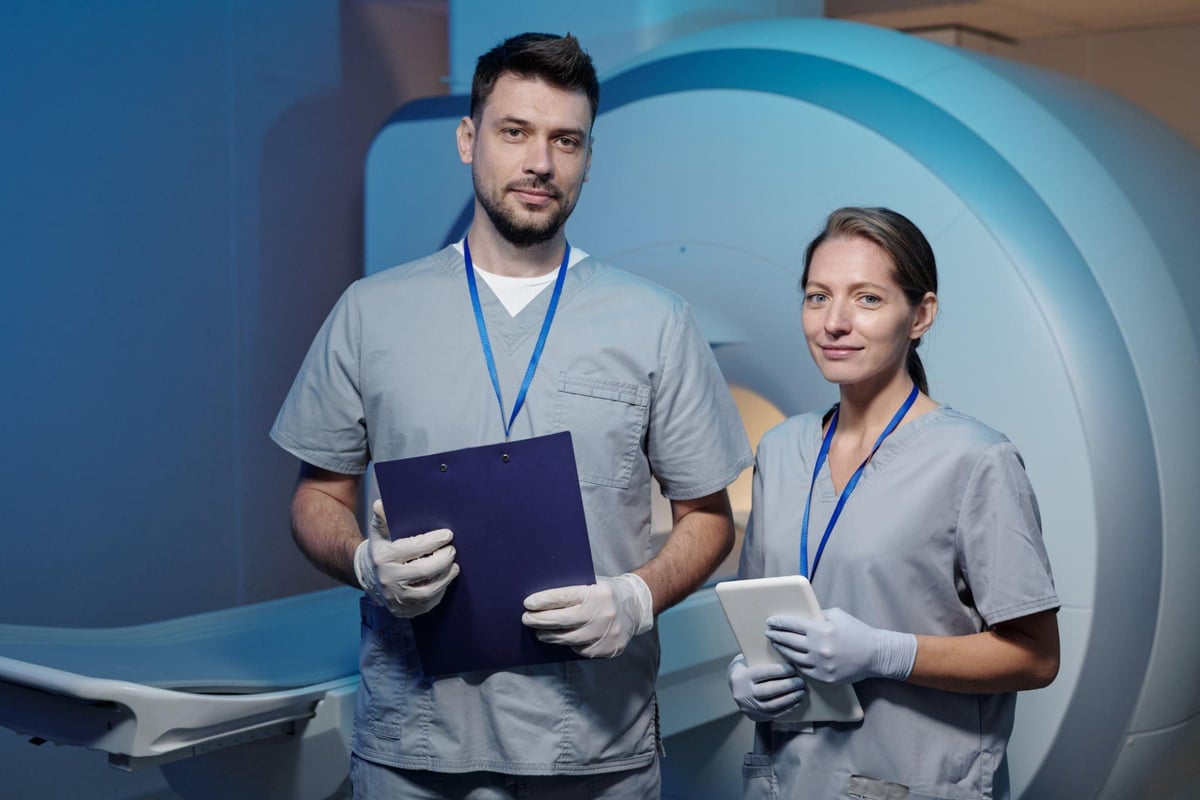
A radiology technician, also known as a radiologic technologist, is a healthcare professional who operates medical imaging equipment, such as X-rays, computed tomography (CT) scans, and magnetic resonance imaging (MRI) machines. They are responsible for accurately positioning patients, adjusting equipment, and producing high-quality images that assist physicians in diagnosing and treating various medical conditions.
To become a radiology technician, individuals must complete an accredited radiology technician program, which typically takes two years to complete. These programs provide students with a combination of classroom instruction and hands-on clinical experience, covering topics such as human anatomy, radiation physics, patient care, and imaging techniques.
In Pittsburgh, the fastest path to becoming a radiology technician is to enroll in an associate's degree program at a local community college or technical school. These programs can be completed in as little as two years, allowing students to start their careers in the field relatively quickly.
There are several options for radiology technician classes in the Pittsburgh area, each with its own unique features and requirements. Here are a few examples:
CCAC offers an Associate of Science degree in Radiologic Technology. The program takes two years to complete and includes both classroom instruction and clinical rotations at local healthcare facilities. Tuition and fees for the program are approximately $10,000 for in-county students.
PTC's Radiologic Technology program is an Associate of Science degree that can be completed in 21 months. The program includes a mix of classroom learning and hands-on clinical experiences, preparing students for careers in diagnostic imaging. Tuition and fees for the program are around $35,000.
UPMC's School of Radiologic Technology is a hospital-based program that leads to a certificate in radiologic technology. The program takes 24 months to complete and includes extensive clinical training at UPMC hospitals. Admission to the program is highly competitive, and tuition is approximately $5,000 per year.
While in-person radiology technician classes are the most common option in Pittsburgh, there are also some online and free resources available for those interested in the field.
Several online radiology technician programs are available, allowing students to complete their education remotely. These programs often offer the same curriculum as on-campus programs, with the added flexibility of online learning.
There are no completely free radiology technician programs in Pittsburgh, but some schools and organizations do offer scholarships and financial aid to help offset the cost of tuition and other expenses.
After completing a radiology technician program, graduates must pass the American Registry of Radiologic Technologists (ARRT) examination to become certified and licensed to practice in the field. The certification process involves passing a comprehensive exam that covers a range of topics, including radiation physics, patient care, and imaging procedures.
The job environment for radiology technicians in Pittsburgh is quite promising. The city is home to several major healthcare systems, including UPMC, Allegheny Health Network, and VA Pittsburgh Healthcare System, which employ a significant number of radiology technicians. Additionally, many private imaging centers and outpatient clinics in the area also hire radiology professionals.
If you're interested in becoming a radiology technician and earning a good radiology technician salary, Pittsburgh is an excellent place to pursue your goals. With a variety of radiology technician schools, both in-person and online options, and a strong job market, the city offers ample opportunities for aspiring radiology professionals. By researching the available programs, understanding the training requirements, and exploring the certification process, you can take the first steps towards a rewarding career in the field of radiology.
If you've been reading this article and long to become a Phlebotomist, but you live in a different state, don't lose hope -- achieving your goal is still within reach. You might consider exploring opportunities to become a Phlebotomist in Augusta, Columbus, Oklahoma City, Provo, Urban Honolulu. If none of these locations work for you, Dreambound makes it easier than ever to pursue your dreams regardless of your location by simplifying the process of finding and comparing Phlebotomy classes through a convenient search by zip code. With determination and access to the right resources, you can confidently pursue a successful career in healthcare, no matter where you live.
Dreambound's platform allows prospective students to find the right educational program for them through searching, filtering, and connecting with our extensive selection of career & technical education partners.
Dreambound has over 70 programs across healthcare, technology, business, and industrial trades. This includes programs such as Medical Billing, Cybersecurity, and welding.
Some of our schools offer financial aid for those who qualify. Many others offer payment plans, where you can pay the cost of class over time.
Yes, Dreambound offers many online programs. On Dreambound's search, you can filter by online, in-person, and hybrid (part online, part in-person).
Dreambound is completely free for you to use! We are supported by schools and organizations who pay to advertise on our website, so we can offer all of our career resources for free.
