Radiology Technician Classes Near Me in Greenville
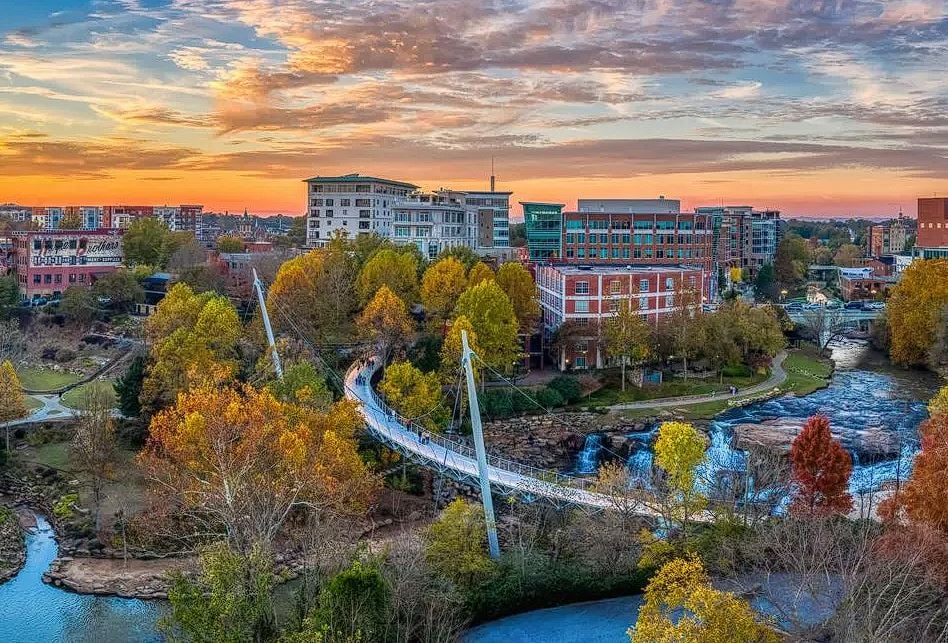
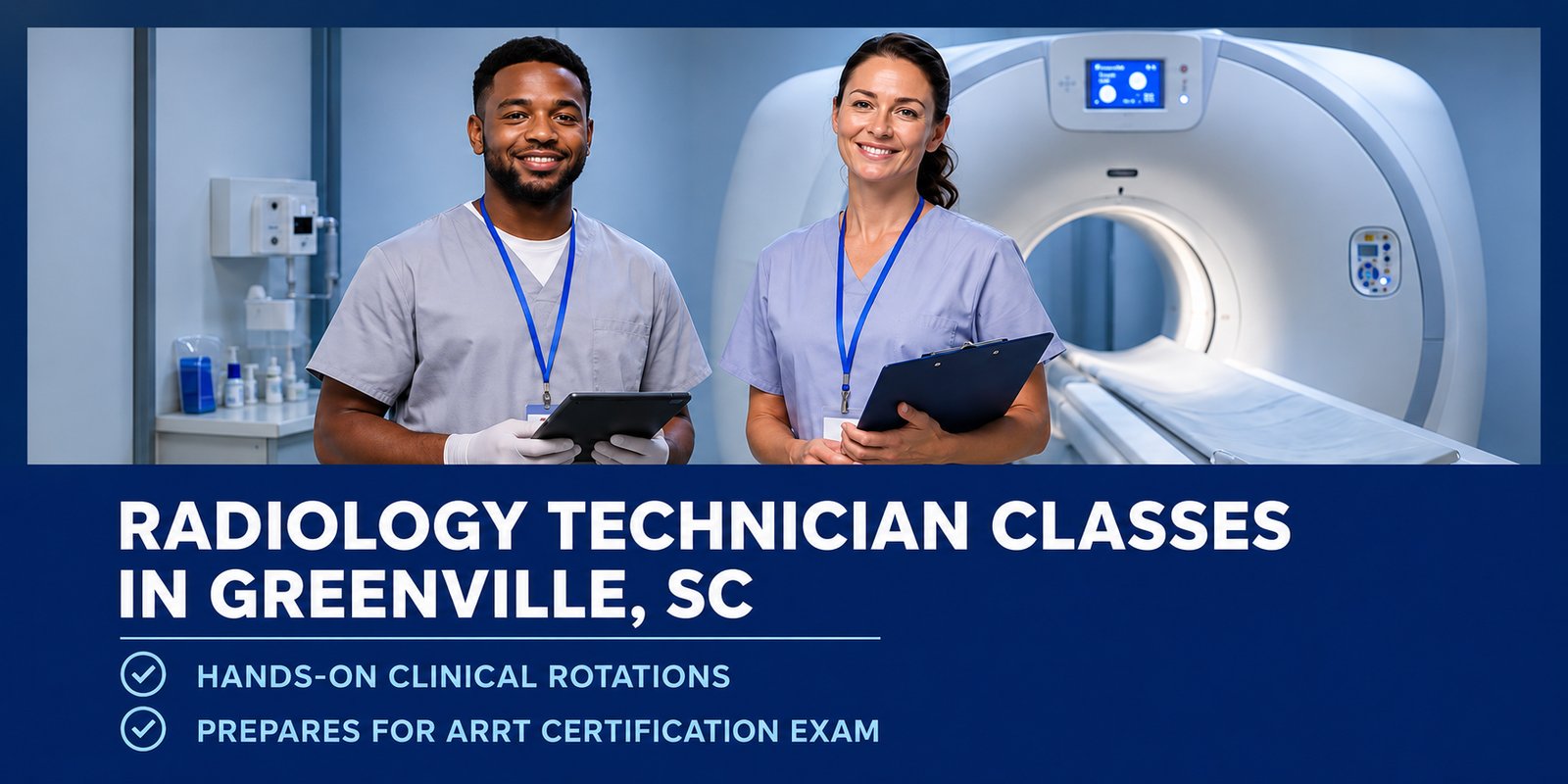
In Greenville, radiology technician classes run through a short list of accredited associate-degree programs, with clinical rotations at the region's hospitals. The route to a full radiologic technologist career is the standard one: finish a JRCERT-accredited associate degree, pass the national ARRT exam, then start working. One local detail sets South Carolina apart and rarely shows up on other Greenville pages. Passing the national exam is not the last step here. Before you can operate an X-ray machine in the state, you also need a certificate from the South Carolina Radiation Quality Standards Association.
Key Points
- The Upstate has a handful of accredited associate-degree radiography programs, most run through technical and community colleges with clinical rotations at local hospitals.
- South Carolina requires a state certificate to operate radiation equipment, issued by the SCRQSA on top of the national ARRT credential.
- ARRT certification satisfies the state automatically, so ARRT-certified techs receive the South Carolina certificate without a separate exam.
- A full radiographer credential takes about 2 years; a limited-scope X-ray credential is shorter but covers only a set list of routine exams.
- Radiologic technologists in South Carolina earn a median of $69,600 a year, with 5 percent job growth projected through 2034.
Radiology Technician Schools In and Near Greenville
Greenville sits in the Upstate, where radiography training is offered through a small number of accredited associate-degree programs at technical and community colleges, plus one hospital-based route in the area. Each pairs classroom work with clinical rotations at the region's major systems, including Prisma Health Upstate and Greenville Memorial, Bon Secours St. Francis, and Shriners Children's Greenville, and each prepares you for the national ARRT Radiography exam and the full technologist career. Seats are limited and admission is competitive, so most programs take a single cohort a year and expect prerequisites like anatomy and physiology, algebra, and English up front.
The detail that separates a real radiography program from a quick certificate is accreditation. Before you commit anywhere, confirm the program is JRCERT-accredited and prepares you for the ARRT Radiography exam, not just a limited-scope certificate. Dreambound pulls accredited radiology technician classes near you into one view as new cohorts open, so you can compare them by cost, length, and format instead of chasing one school page at a time.
Full Radiologic Technologist vs Limited-Scope X-Ray Operator
Not every course labeled "radiology technician" leads to the same job, and the difference matters before you pay tuition. A full radiologic technologist trains on every imaging area and can move into CT, MRI, or mammography later. A limited-scope X-ray operator trains on a shorter list, such as chest, spine, and extremities, and cannot do contrast studies, fluoroscopy, CT, or mammography.
| Factor | Full radiologic technologist | Limited-scope X-ray operator |
|---|---|---|
| Training | JRCERT-accredited associate, about 2 years | Shorter coursework plus clinicals |
| Exam | ARRT Radiography | ARRT Limited Scope |
| Scope | All imaging, room to specialize | A set list of routine X-rays only |
Many fast or online "radiology technician" courses actually prepare you for the limited-scope exam, not full radiography. If your goal is the full career and the higher pay, hold out for a JRCERT-accredited program that puts you on the ARRT Radiography track. If you need to start sooner or keep working, limited scope is a legitimate on-ramp. CCI Training Center's online program is one route open to South Carolina students, pairing about 8 months of online coursework with local clinical hours to prepare you for the ARRT Limited Scope exam, and it sits alongside other online radiology technician classes you can compare on Dreambound.
Do You Need a License in South Carolina?
Yes, and this is the step most other Greenville pages skip. Passing the national exam is not quite the finish line here. Under the state's Medical Radiation Health and Safety Act, you must hold a certificate from the South Carolina Radiation Quality Standards Association (SCRQSA) to operate radiation-producing equipment, and you have to keep a current certificate posted where you work.
The step is simpler than it sounds if you take the national exam first. South Carolina treats ARRT certification as proof that you are qualified, so an ARRT-certified technologist receives the state certificate without a separate exam. You submit an application, a copy of your ARRT card, and a $50 fee. The certificate renews every 2 years, and full radiographers keep it current with 24 continuing-education hours per cycle, the same hours ARRT already asks for. If you finish an accredited program but have not passed the ARRT exam, the state issues a temporary certificate for up to 2 years, after which you pass a South Carolina exam to keep working.
How Long It Takes and What It Costs
A full radiography program takes about 2 years, and it is effectively full-time. Clinical rotations run during weekday hospital hours, so most students cut back to part-time work while in the program. If you need to keep working full-time, the shorter limited-scope route is the more realistic option.
Cost depends on the school and your residency. South Carolina's technical-college radiography programs bill by the credit hour, often around $230 to $270 per credit for in-state residents, so a full associate of about 75 credits runs roughly $16,000 to $19,000 in tuition before fees, books, and uniforms. Financial aid and state tuition assistance for technical-college students can bring that down. Admission is the harder part: the professional phase is competitive and usually takes one cohort each fall, with applications closing in the spring, so strong prerequisite grades matter more than anything. Private and out-of-state programs cost more, and the cheapest and fastest radiology technician programs tend to be the community-college and limited-scope routes. Budget for the extras too: the ARRT exam is $225, on top of a background check and supplies.
Radiologic Technologist Pay in Greenville
Radiologic technologists in South Carolina earn a median of $69,600 a year, or $33.46 an hour, as of May 2025. That runs below the national median, worth knowing going in. Pay climbs with experience and with specialties like CT, MRI, and mammography, which is the main reason full radiography out-earns the limited-scope route over a career.
The field is projected to grow 5 percent from 2024 to 2034. Around Greenville, the same systems that host clinical rotations anchor hiring, along with imaging centers and outpatient practices across the region.
How to Become a Radiology Technician in Greenville
The path from student to working technologist follows four steps:
- Finish an accredited program. Complete a JRCERT-accredited associate degree in radiologic technology, including the clinical rotations.
- Pass the ARRT exam. Apply through the ARRT Primary Pathway, which costs $225 and allows up to 3 attempts within 3 years. A scaled score of 75 passes.
- Get your South Carolina certificate. Send the SCRQSA your application, ARRT card, and $50 fee, and you can start working once it is posted.
- Keep both current. ARRT and the state each renew on a 2-year cycle, covered by the same 24 continuing-education hours.
If you take the limited-scope route instead, the steps are similar but shorter: you sit for the ARRT Limited Scope exam and register the matching state category.
Frequently Asked Questions
Is there a radiology tech school in Greenville, SC?
Yes. The Greenville area has accredited associate-degree radiography programs at its technical and community colleges, plus a hospital-based option nearby. Because seats are limited and admission is competitive, comparing accredited programs side by side on Dreambound is the fastest way to find an open cohort.
How long is a radiology program in Greenville?
About 2 years, or 5 semesters. Local programs run in two phases: general-education prerequisites first, then a competitive professional phase that starts each fall and includes the clinical rotations. Because of that clinical schedule, the program is effectively full-time.
How fast can you become a radiology technician?
The fastest route to imaging work is a limited-scope X-ray credential, which can take under a year. It qualifies you for a set list of routine X-rays, so it fits best if you want to start quickly rather than move into CT or MRI later. Full radiography takes about 2 years but opens the higher-paying specialties.
Do you need a license to be a radiology tech in South Carolina?
Yes. South Carolina requires a state certificate through the SCRQSA to operate radiation equipment. If you already hold national ARRT certification, the state issues its certificate without a separate exam, for a $50 fee renewed every 2 years.
What does a radiology tech make in South Carolina?
The median is about $69,600 a year, or $33.46 an hour, as of May 2025, which sits below the national median. New technologists usually start lower and move up with experience and with specialties like CT and MRI.
Planning Your Radiology Technician Path in Greenville
The biggest decision in Greenville is not where to apply first, it is which credential you actually want. Full radiography takes about 2 years, needs the ARRT exam plus the South Carolina certificate, and opens the door to CT and MRI later. Limited scope gets you working sooner but stops at routine X-rays. Either way, South Carolina adds that state certificate on top of the ARRT exam, so plan for it from the start.
Once you know your route, compare accredited radiology programs on Dreambound by length, format, and start date, and make sure the one you pick is JRCERT-accredited before you apply.