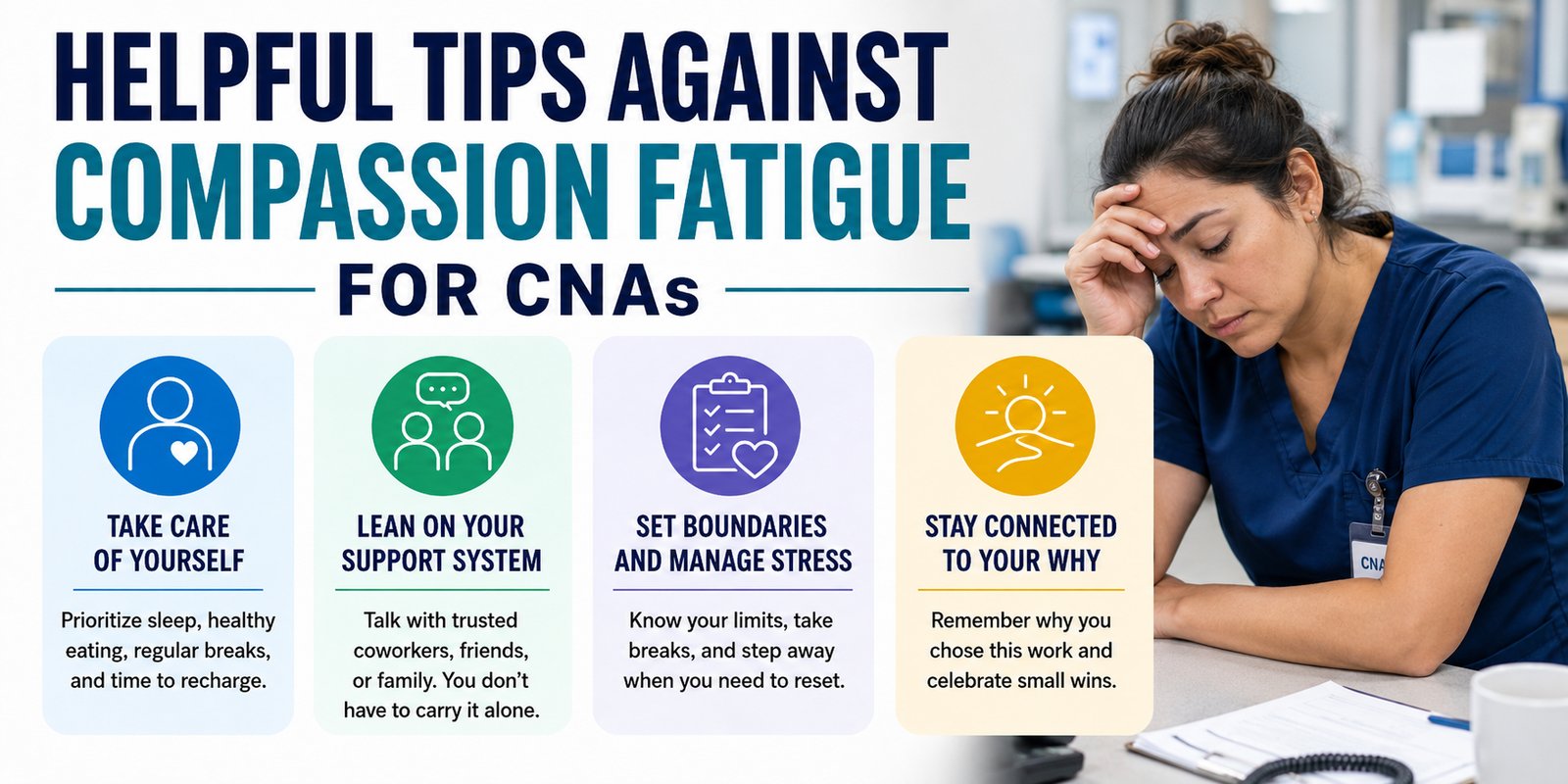
Helpful Tips Against Compassion Fatigue for CNAs
See if you qualify for Certified Nursing Assistant programs
Answer a few questions in 2 minutes. Free, no commitment.
Compassion fatigue is the physical, mental, and emotional wear that comes from caring for people while nobody, including you, is checking on you. It is common in CNA work, common enough that federal health agencies run campaigns about it, and it is not a character flaw or proof you picked the wrong career. It usually announces itself quietly: going through the motions, dreading shifts you used to like, snapping at small things that never used to register. Two facts make it easier to fight. It is not the same thing as burnout, and there is a free self-check, used in actual research, that shows you exactly where you stand.
6. Set Boundaries Without Guilt
No is not a negative word. Saying it does not make you less compassionate; it means you have stopped carrying the entire building on your back. Set boundaries with patients' families, with coworkers who lean too hard, and with an employer who would happily take more than you can give. You come to work, you do the job as well as you can, and then you leave the work where it belongs.
7. Listen to Yourself First
You know your body better than anyone scheduling you does. The gut feeling telling you to slow down, take the break, or rethink the assignment knows a thing or two. And the oldest rule in caregiving applies to caregivers too: if you do not listen to your body, it will eventually make you listen.
When It Is More Than Fatigue
Sometimes the tips are not enough, and recognizing it early is itself a kind of strength. If the dread, numbness, or low mood holds on for weeks or starts touching everything outside work, that is the point to bring in a professional: a therapist, your doctor, or the counseling inside an employee assistance program. And sometimes the honest answer is not recovery but change. The skills that make you good at this work transfer further than you might think: a different setting changes the pace, a different credential changes the work itself, and deciding to look around is not a betrayal of your patients or of yourself. Some of the best people in healthcare got there by admitting the role they started in was not the role they were built for.
Frequently Asked Questions
What is CNA fatigue?
CNA fatigue is the everyday name for the layered exhaustion of nursing assistant work: physical tiredness from the lifting and the hours, plus the emotional wear clinicians call compassion fatigue. The physical part responds to rest. The emotional part, built from burnout and secondary traumatic stress, needs the longer fixes covered above.
Why is being a CNA so tiring?
Because the job spends two budgets at once: the physical work of transfers, call lights, and long shifts, and the emotional work of staying present with people who are sick, declining, or in pain. Either alone is manageable. Together they drain faster than most jobs, which is why recovery has to be deliberate.
How to fix fatigue quickly?
For the body, the real quick fixes are the old ones: sleep, water, real food, and a genuine day off. Compassion fatigue has no quick fix; it eases through boundaries, support, and the structural changes above. If a week of rest does not touch it, take that seriously and start on the longer fixes.
Keeping the Compassion Without the Fatigue
The compassion that brought you into this work is worth protecting, and protecting it is a skill, not a luxury. The distinction is the part to keep: rest treats tiredness, while boundaries, support, and clear-eyed reevaluation treat compassion fatigue, and now you know which one you are dealing with. Fatigue happens to the best people in this field; what shapes a career is how you answer it. Whichever answer it turns out to be, a new direction or a night's recovery, Dreambound's guides are there when you want them, and the smallest tip on the list works tonight either way.