Radiology Technician Classes Near Me in Little Rock

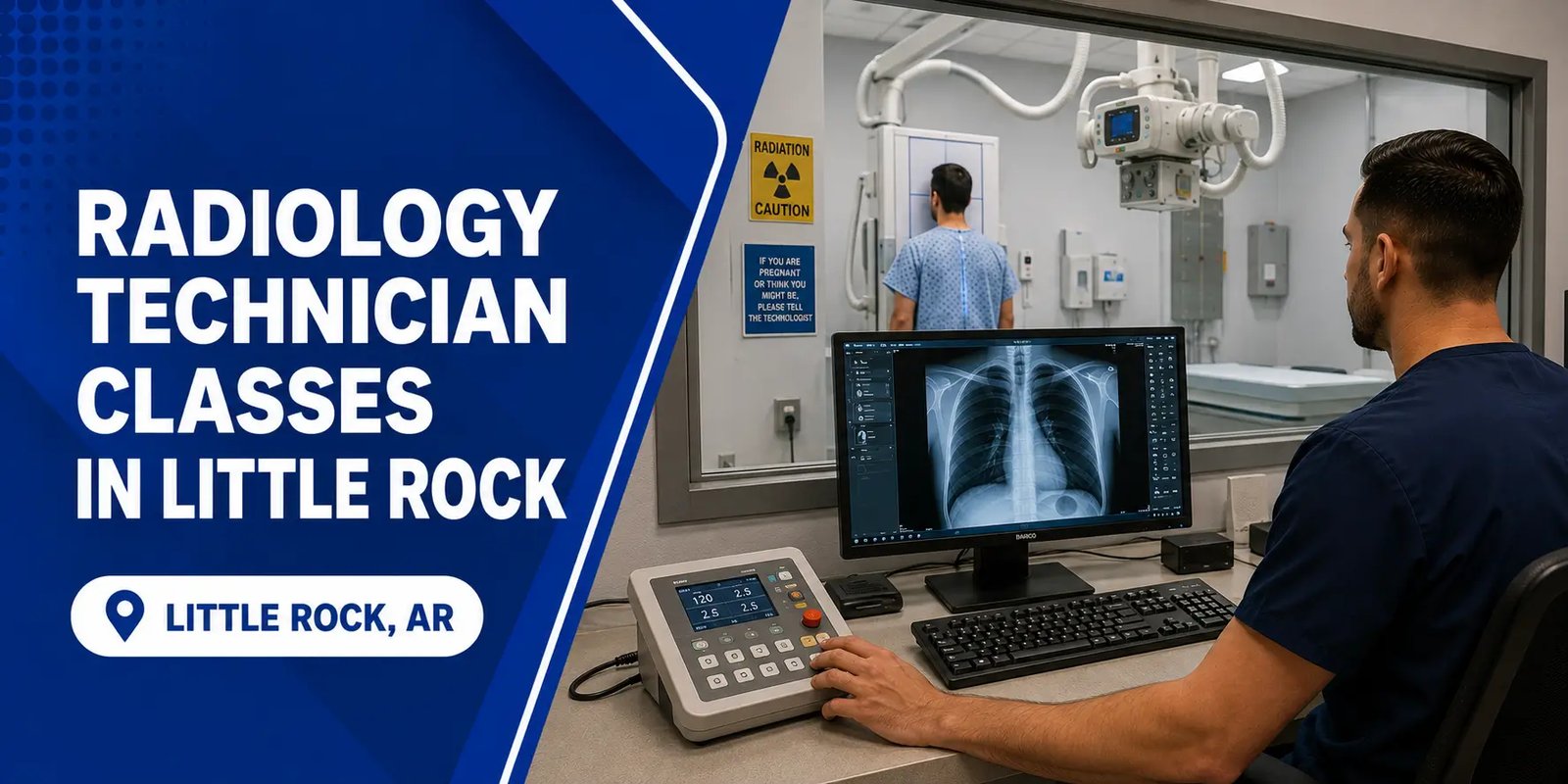
Arkansas licenses radiology techs through its own Department of Health, and it can grant a temporary license that lets qualifying graduates work under supervision while they prepare for the national exam. The full license runs on ARRT, so the standard path is an accredited radiography program plus the ARRT Radiography exam. In the Little Rock metro, the median wage for the role is $73,830 a year, about $35.49 an hour, as of May 2025. Training usually takes about two years, and knowing how Arkansas structures the license before you pick a program keeps your plan on track.
Key Points
- Arkansas requires a state license from the Department of Health to work as a radiologic technologist, not just a national credential.
- The full Radiologic Technologist license requires an ARRT-approved radiography program and passing the ARRT Radiography exam.
- Arkansas also issues a limited license for a narrower scope, such as chest, extremity, skull and sinus, spine, or podiatry, and a temporary license for graduates awaiting the national exam.
- The full license covers CT, mammography, and bone densitometry, so those do not need a separate Arkansas credential.
- The role's median wage in the Little Rock metro is $73,830 a year, or $35.49 an hour, per May 2025 BLS data.
- Licenses renew each year and require six continuing-education hours, three of them in the radiologic sciences.
Arkansas Radiologic Technologist License Requirements
Arkansas is a licensing state, and the credential comes from the Department of Health Radiologic Technology Licensure program rather than a separate board. The full Radiologic Technologist license is the standard credential: you complete an ARRT-approved radiography program and pass the ARRT Radiography exam, and it authorizes the full range of radiography, including CT, mammography, and bone densitometry.
Arkansas also issues narrower credentials. A limited license covers specific procedures, such as chest, extremity, skull and sinus, spine, or podiatry, for people who do not need the full scope. A limited specialty license covers invasive cardiovascular imaging under supervision. Radiation therapy and nuclear medicine have their own Arkansas licenses, with radiation therapists qualifying through ARRT and nuclear medicine technologists qualifying through NMTCB, ARRT, or ASCP certification.
Arkansas can also grant a temporary license to new graduates. If you have finished an accredited program and are awaiting the national exam, it lets you work under a licensed practitioner's supervision while you test.
Full licenses renew each year and require six continuing-education hours, three of them in the radiologic sciences. License fees run $45 for one category or $65 for more than one.
Radiology Technician Salary in Little Rock
In the Little Rock-North Little Rock-Conway metro, radiologic technologists earn a median of $73,830 a year, or about $35.49 an hour. Experience and the mix of imaging you handle move pay within that range.
BLS projects about 4% growth for the field from 2024 to 2034, with many openings expected as technologists change fields or leave the workforce. Major Little Rock-area employers include the University of Arkansas for Medical Sciences (UAMS) Medical Center, Baptist Health, CHI St. Vincent, and Arkansas Children's Hospital.
How to Become a Radiology Technician in Little Rock
Three steps lead to a full Arkansas Radiologic Technologist license:
- Complete an ARRT-approved radiography program with supervised clinical rotations, usually about two years.
- Pass the ARRT Radiography certification exam.
- Apply to the Arkansas Department of Health for your Radiologic Technologist license.
If you have graduated and are awaiting the exam, Arkansas may grant a temporary license so you can work under supervision while you prepare. A limited license is a shorter route for a narrower scope of practice.
Frequently Asked Questions
Can you work as a radiology tech in Arkansas before passing the ARRT exam?
Yes, on a temporary license. If you have finished an accredited program and are awaiting the national exam, Arkansas may grant one so you can work under a licensed practitioner's supervision while you test. It runs up to 180 days with a limited renewal, and the state can extend it in hardship or continued-progress cases. It is a bridge to full licensure, not a permanent status.
Does an Arkansas radiologic technologist license cover CT and mammography?
Yes. The full Radiologic Technologist license authorizes the complete range of radiography, including CT, mammography, and bone densitometry, so you do not need a separate Arkansas credential for those. Employers may require or prefer additional ARRT credentials for specialized modalities such as CT, which you earn through ARRT rather than the state.
Can you become a radiology tech in Arkansas without a degree?
For the full license, you need ARRT certification, which requires an associate degree or higher plus an ARRT-approved radiography program. The degree can be in another subject and does not have to come from the radiography program itself. Arkansas's limited license is the exception: it covers a narrower scope, such as chest or extremity imaging, without the full radiographer pathway.
Do you need a state license in Arkansas, or is ARRT certification enough?
You need both, in effect. ARRT certification is the exam Arkansas builds its license on, but you still apply to the Arkansas Department of Health for the state license before you can practice. ARRT is the national credential behind the license, not a replacement for it.
How the Arkansas License Shapes Your Start
Arkansas's temporary license is the detail worth planning around: it lets qualifying graduates work under supervision while they prepare for the ARRT exam, so the state license and the national exam fit together rather than forcing you to wait. Sorting out whether the full license or the narrower limited license matches your goals before you pick a program keeps your training pointed at the right credential. Little Rock's hospital systems, from UAMS to Baptist Health and Arkansas Children's, give licensed technologists a solid base of places to work. Compare radiology technician programs on Dreambound by schedule and delivery format to find one that matches the Arkansas license you are aiming for.