Radiology Technician Classes Near Me in Las Vegas

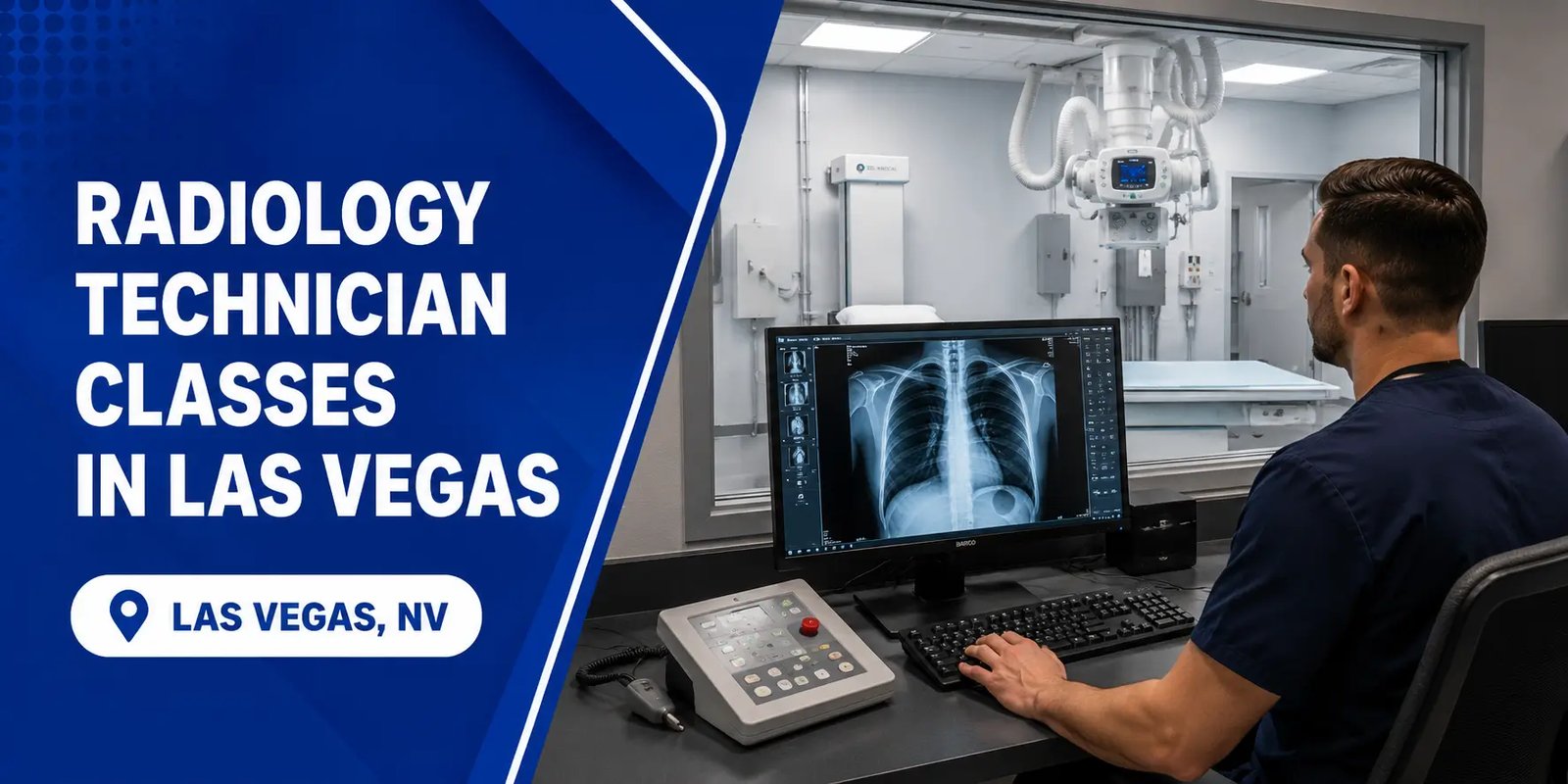
Nevada licenses radiology techs through its own Radiation Control Program, part of the Division of Public and Behavioral Health, rather than through a medical board. It recognizes ARRT for the full radiography license and also offers a formal limited license for a narrower scope of X-ray work. The Las Vegas metro has a median wage of $81,170 a year, about $39.02 an hour, as of May 2025. The standard route takes about two years of training plus the state license, so it helps to know how Nevada handles the credential before you pick a program.
Key Points
- Nevada requires a state license to do radiologic imaging, issued by the DPBH Radiation Control Program under NRS and NAC Chapter 653.
- The full radiography license calls for an accredited program plus the certification Nevada recognizes, which for radiography is ARRT.
- Nevada also offers a limited license for a restricted, specified scope of X-ray work, and a separate rural authorization for qualifying rural health settings.
- CT and fluoroscopy carry added competency requirements: a licensed tech who holds the matching ARRT certification can perform them without a separate permit.
- May 2025 BLS data puts the Las Vegas metro median at about $81,170 a year for the role.
- Licenses renew every two years; a full radiologic imaging license requires 24 continuing-education credits, and a limited license or rural authorization requires 20 in ARRT Category A or A+.
Nevada Radiologic Technologist License Requirements
Nevada is a licensing state, and it regulates radiologic imaging through a radiation-safety agency rather than a medical board. The Radiation Control Program, part of the Division of Public and Behavioral Health, licenses radiologic technologists under Nevada Revised Statutes and Administrative Code Chapter 653. It offers a few credential pathways rather than one single license.
For full radiography licensure, you complete an educational program accredited by JRCERT or another accrediting body the Division approves, earn ARRT Radiography certification, and apply for the Nevada license. The state also issues a limited license for specified radiographic procedures, such as chest, extremities, or spine, earned through the ASRT Limited X-Ray Machine Operator curriculum and the ARRT-administered Limited Scope of Practice exam. A separate rural authorization lets qualifying staff take X-rays in rural health clinics and federally qualified health centers in counties with populations under 55,000, and it generally does not apply to Las Vegas-area jobs.
CT and fluoroscopy have their own competency requirements, but they do not require a separate permit for every licensee. A license holder who is ARRT-certified in CT can perform CT, and an ARRT-certified radiographer can perform fluoroscopy within their scope. Registration comes into play only in certain cases, such as performing CT while still training toward that certification, or for technologists grandfathered from practice that began before January 1, 2020.
Licenses renew every two years. A full radiologic imaging license requires 24 continuing-education credits per cycle, and a limited license or rural authorization requires 20 in ARRT Category A or A+. Nevada also requires applicants to attest to training on safe and appropriate injection practices when they first get licensed and at each renewal, a patient-safety rule the state applies across health credentials.
Radiologic Technology Programs Near Las Vegas
Radiography training around Las Vegas varies by school. Associate-degree programs can run from about 18 months to two years, while a university pathway may lead to a bachelor's degree, and both can prepare you for the ARRT Radiography exam. Limited-scope training is usually shorter than full radiography education, though tuition and total cost vary by program, so it is worth comparing a few. Whichever you pick, confirm the program meets Nevada's accreditation requirements. Some coursework may be online, but the supervised clinical education and imaging competencies have to be completed in person.
You can compare radiology technician programs by format and location on Dreambound to find options that fit your schedule, wherever you end up training.
Radiology Technician Salary in Las Vegas
In the Las Vegas metro, radiology technicians earn a median of $81,170 a year, or about $39.02 an hour. Pay varies by experience, employer, shift, and imaging specialty.
Nationally, employment is projected to grow about 4% from 2024 to 2034, with additional openings as workers transfer to other occupations or leave the labor force. Major Las Vegas-area employers include University Medical Center of Southern Nevada, a public hospital and Level I trauma center; Sunrise Hospital and Medical Center; the Valley Health System hospitals; and Dignity Health-St. Rose Dominican.
How to Become a Radiology Technician in Las Vegas
Getting a Nevada license usually takes four steps:
- Finish an accredited radiography program with supervised clinical rotations, commonly 18 months to two years.
- Earn ARRT Radiography certification.
- Apply to the Nevada Radiation Control Program for your radiologic imaging license.
- Add CT or another modality later by earning that modality's ARRT certification when your role calls for it.
Most students reach licensure in about two years of full-time study, plus time for the exam and the state application. If you only need a narrower scope, the limited license route can be shorter than the full program.
Frequently Asked Questions
Do you need a separate registration to operate CT or fluoroscopy in Nevada?
Usually no. Under Nevada law, a licensed tech who holds ARRT certification in CT can perform CT, and an ARRT-certified radiographer can perform fluoroscopy within their scope, without a separate permit. Registration only applies in specific cases, such as performing CT while you are still training toward that certification, or for technologists grandfathered from practice that began before January 1, 2020. In short, the credential that opens CT or fluoroscopy is the ARRT certification, not extra paperwork.
Can you work with a limited license in Nevada instead of a full one?
Yes, for a narrower scope. Nevada's limited license authorizes specified radiographic procedures, such as chest, extremities, or spine, rather than the full range a radiography license covers. It is earned through the ASRT Limited X-Ray Machine Operator curriculum and the ARRT Limited Scope exam, and it does not cover contrast studies, nuclear medicine, or radiation therapy. It can be a shorter path in, but it caps what you can do, so many people still pursue the full license and ARRT certification for wider options.
Does Nevada accept ARRT certification for a radiologic technologist license?
Yes. ARRT Radiography is the certification Nevada recognizes for full licensure, paired with an accredited radiography program. You still apply to the Radiation Control Program for the Nevada license itself, so ARRT is the credential behind the license rather than a replacement for it.
What is a rural authorization, and does it apply around Las Vegas?
A rural authorization is a separate Nevada pathway for taking X-rays in rural health clinics and federally qualified health centers, in counties with populations under 55,000, with added training and quality-assurance requirements. It is built for underserved rural areas, so it generally does not apply to Las Vegas-area employment, though it is useful to know if you plan to work in rural Nevada.
Getting Licensed the Nevada Way
Nevada's setup is worth planning around: the license comes from the state's Radiation Control Program, ARRT is the credential behind it, and you can enter through either the full radiography route or a narrower limited license. Advanced work like CT or fluoroscopy follows from earning that modality's certification, not a separate permit. Sorting out which credential your target job needs before you pick a program keeps your training on track. Las Vegas offers a wide range of employers, from the public trauma center to the large hospital systems across the valley. Compare radiology technician programs by format and location on Dreambound to find one that fits your schedule and Nevada's licensing path.