$173 to start
$2,200 total
Financial aid (may be available)
Financial aid (may be available)
Financial aid (may be available)
Our online Associate of Applied Science Degree in Radiologic Technology provides training for a career as a radiologic technologist. The program is designed to educate and help prepare the student to perform radiographic examinations, provide quality patient care, and assist the radiologist with diagnostic procedures. This program serves as a bridge for Texas-certified LMRTs to become eligible for the American Registry of Radiologic Technologists certification exam in Radiography. Advanced educational elements in anatomy and physiology, patient safety, image production, radiographic pathology, comprehensive review, and advanced clinical experience and procedures help provide graduates the opportunity to develop the skills necessary to obtain entry-level radiography positions in the field.
No cost info
Financial aid (may be available)

Financial aid (may be available)
$40 total
$125 total
No cost info
No cost info
No cost info
Focus on the creative career opportunities in the scientific field of radiology. Our Radiologic Technology program allows you to combine basic scientific principles with the creativity of art by taking radiographic images to aid with diagnosis of illness and injuries.
You can choose to take our program via the Lincoln track or the Distance track. If you take the Lincoln track, you will perform your clinical in Lincoln with courses offered in person; if you take the Distance track you will perform your clinical at a pre-approved hospital outside Lincoln and take your courses online. Once you complete the program you will have the skills necessary to be successful and prepared to take the American Registry of Radiologic Technologist Exam and apply for state licensure where you choose to work.
No cost info
In as few as 24 months, you could be ready to work as a radiologic technologist.1 With an Associate's degree in Radiologic Technology, gain proficiency in diagnostic imaging, physiology and radiation safety, and learn to confidently convey assured leadership with patients. With hands-on experience at clinical sites, on-campus labs, diverse clinical practicum settings and online coursework, you’ll be confident in your skills outside of the classroom and ready to start your career.
No cost info
Buffalo, New York, is a city with a promising job market for Radiology Technician professionals. With the increasing demand for healthcare services, the need for skilled Radiology Technicians continues to grow. If you're considering a career in this field, you'll be pleased to know that there are several radiology technician schools in the Buffalo area that can help you become a Radiology Technician and earn a competitive radiology technician salary.
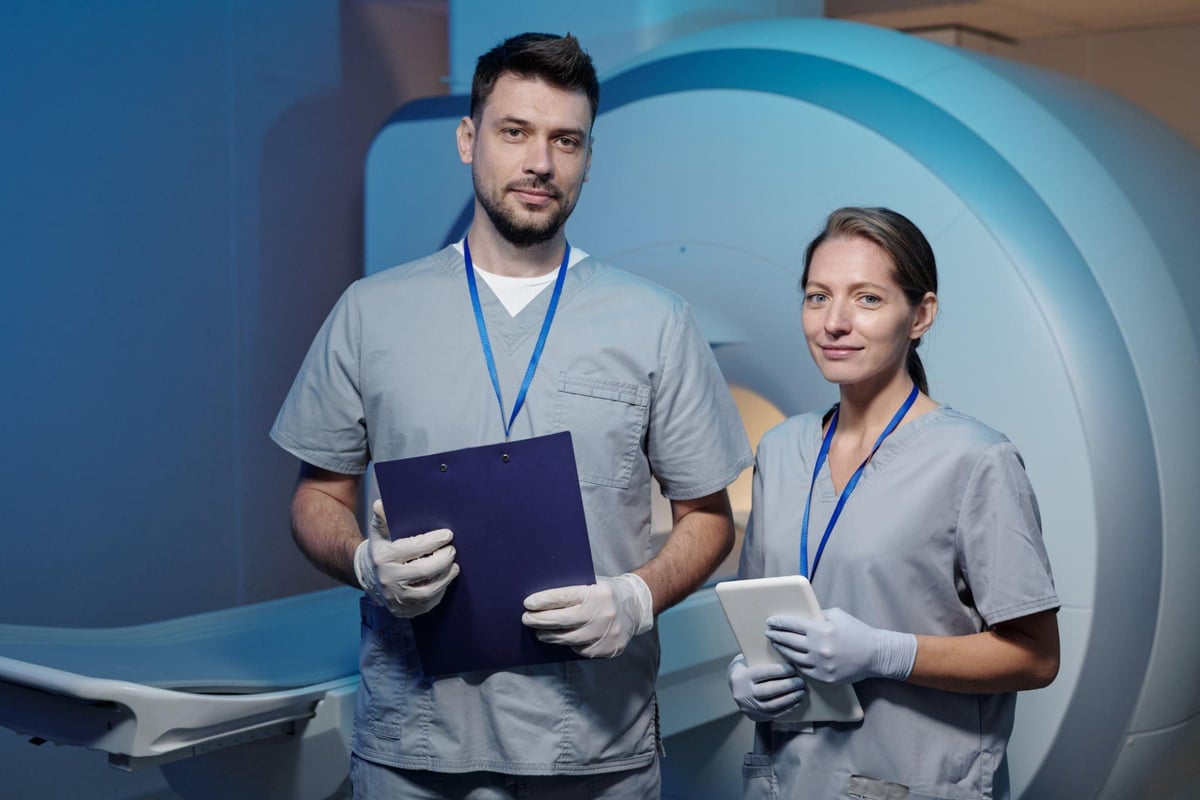
A Radiology Technician, also known as a Radiologic Technologist, is a healthcare professional who specializes in operating medical imaging equipment, such as X-rays, computed tomography (CT) scans, and magnetic resonance imaging (MRI) machines. Their primary responsibilities include preparing patients for imaging procedures, positioning them correctly, and ensuring the quality of the images obtained.
To become a Radiology Technician, individuals typically need to complete an accredited Radiology Technician program, which can be found at various educational institutions in the Buffalo area. These programs usually take two years to complete and result in an Associate's degree or a Certificate of Completion.
The fastest way to become a Radiology Technician in Buffalo is to enroll in a Certificate of Completion program, which can be completed in as little as one year. These programs focus on the essential skills and knowledge required to perform entry-level Radiology Technician duties.
There are several Radiology Technician classes available in the Buffalo area, each with its own unique characteristics. Here are a few examples:
Erie Community College: The Radiology Technology program at Erie Community College is a two-year Associate's degree program that prepares students for entry-level positions as Radiology Technicians. The program includes both classroom instruction and clinical rotations in various healthcare settings. Tuition costs for in-state students are approximately $5,000 per year.
Trocaire College: Trocaire College offers a Radiologic Technology program that leads to an Associate's degree. The program takes two years to complete and includes a combination of classroom learning and hands-on clinical experiences. Tuition for the program is around $15,000 per year.
Bryant & Stratton College: Bryant & Stratton College has a Radiologic Technology program that can be completed in as little as 21 months. The program is designed to provide students with the necessary skills and knowledge to become Radiology Technicians. Tuition for the program is approximately $24,000.
If you've been reading this article and long to become a Radiology Technician, but you live in a different state, don't lose hope – achieving your goal is still within reach. You might consider exploring opportunities to become a Radiology Technician in Boise City, Dayton, New Orleans, Palm Bay, St. Louis. If none of these locations work for you, Dreambound makes it easier than ever to pursue your dreams regardless of your location by simplifying the process of finding and comparing Radiology Technician classes through a convenient search by zip code. With determination and access to the right resources, you can confidently pursue a successful career in healthcare, no matter where you live.
In addition to traditional in-person Radiology Technician classes, there are also online options available for those who prefer a more flexible learning environment. For example, Erie Community College offers an online Radiologic Technology program that allows students to complete the majority of their coursework remotely, with only occasional in-person requirements.
Unfortunately, there are no free Radiology Technician classes available in the Buffalo area. All of the programs mentioned require tuition and fees to be paid. However, students may be eligible for financial aid, scholarships, or other forms of assistance to help offset the cost of their education.
To work as a Radiology Technician in New York, individuals must obtain certification from the American Registry of Radiologic Technologists (ARRT). This involves passing a comprehensive examination that covers various aspects of Radiology Technician practice. Once certified, Radiology Technicians must renew their certification every two years by meeting continuing education requirements.
The job environment for Radiology Technicians in Buffalo is generally positive, with a growing demand for these professionals. Potential employers for Radiology Technicians in the Buffalo area include:
Becoming a Radiology Technician in Buffalo can be a rewarding and fulfilling career path. With the city's growing healthcare industry and the availability of quality Radiology Technician programs, individuals interested in this field have ample opportunities to receive the necessary training and certification to start their careers. Whether you attend a traditional in-person program or explore online options, the path to becoming a Radiology Technician in Buffalo is well-defined and accessible.
If you've been reading this article and long to become a Phlebotomist but live in a different state, don't lose hope -- achieving your goal is still within reach. You might consider exploring opportunities to become a Phlebotomist in Augusta, Greensboro, Miami, Provo, Virginia Beach. Suppose none of these locations work for you. In that case, Dreambound makes it easier than ever to pursue your dreams regardless of your location by simplifying the process of finding and comparing Phlebotomy classes through a convenient search by zip code. With determination and access to the right resources, you can confidently pursue a successful career in healthcare, no matter where you live.
Dreambound's platform allows prospective students to find the right educational program for them through searching, filtering, and connecting with our extensive selection of career & technical education partners.
Dreambound has over 70 programs across healthcare, technology, business, and industrial trades. This includes programs such as Medical Billing, Cybersecurity, and welding.
Some of our schools offer financial aid for those who qualify. Many others offer payment plans, where you can pay the cost of class over time.
Yes, Dreambound offers many online programs. On Dreambound's search, you can filter by online, in-person, and hybrid (part online, part in-person).
Dreambound is completely free for you to use! We are supported by schools and organizations who pay to advertise on our website, so we can offer all of our career resources for free.
