Phlebotomy Classes Near Me in San Bernardino/Riverside
San Bernardino and Riverside have both in-person and online phlebotomy programs, and program length varies by school. The in-person program featured on this page runs 6 weeks, then you sit for a national certification exam. Phlebotomists in the Riverside-San Bernardino-Ontario area earn a median annual wage of $51,490 according to May 2025 BLS data. California is one of the few states that requires phlebotomists to hold a state certificate, the Certified Phlebotomy Technician I (CPT I), and as of January 2026 that certificate renews every year rather than every two. Because the state requires hands-on clinical hours from an approved program, the training you pick matters more here than in most states.
Key Points
- The in-person phlebotomy program featured here runs 6 weeks, and self-paced online options are also open to California students.
- The in-person program featured here lists $2,295 total, while online coursework can start lower, so cost depends on the school and format you choose.
- Phlebotomists in the Riverside-San Bernardino-Ontario area earn a median annual wage of $51,490, with 6% national job growth projected through 2034, faster than the average for all occupations.
- California requires a state certificate, the CPT I, which for applicants without prior experience means 40 hours of classroom training, 40 hours of clinical practice, and at least 50 venipunctures before you can be certified.
- Passing an exam from a California-approved certifying body is one step toward the CPT I certificate, which now renews every year under a 2026 rule change.
Featured Phlebotomy Programs in San Bernardino and Riverside
One in-person option based in the Inland Empire is HealthStaff Training Institute, which runs the same 6-week Certified Phlebotomy Technician program at two local campuses. Dreambound lets you line up phlebotomy programs across California and compare the available options side by side by format, length, and cost.
Phlebotomy is the most-chosen program on Dreambound, ranked number one for two years running in Dreambound's 2025 Student Choice and Interest Report. That popularity tracks the field's short training window and quick entry compared with longer healthcare degrees.
Phlebotomy Technician - HealthStaff Training Institute
Offered in person at the San Bernardino and Ontario campus and at the Temecula campus near Riverside.
- Format: In-person
- Length: 6 weeks (100 clock hours)
- Tuition: $2,295 total
- Includes a 40 to 80-hour clinical externship at an approved facility
Beyond the local campuses, two programs are open to California students fully online rather than at a campus in San Bernardino or Riverside. MedCerts runs self-paced online coursework priced at $2,200 total, with $188 to start, and arranges an in-person externship after the coursework. Penn Foster offers self-paced online training that includes certification exam preparation and a test voucher. One caution for any online route: California only counts training from a CDPH-approved program, so make sure a program qualifies before you commit.
How Long Phlebotomy Training Takes in San Bernardino and Riverside
Program length varies by school and format. The in-person program at HealthStaff featured here runs 6 weeks with 100 clock hours, then places you in a 40 to 80-hour externship at an approved facility, while other in-person programs may run shorter or longer. Self-paced online programs can move faster or slower depending on how much time you put in each week, but the required clinical hours still happen in person.
The coursework is the short part. After training, you complete the clinical procedures, pass the national exam, and submit an application to the state before your certificate is issued. CDPH lists a standard processing time of 60 to 90 days for complete applications, and it cannot be expedited, so plan on a few months from your first class to holding the CPT I certificate, not just the 6 weeks of coursework.
How Much Phlebotomy Classes Cost and How to Pay for Them
The phlebotomy programs featured on this page run about $2,200 to $2,300 total, which is on the lower end for healthcare training. HealthStaff lists $2,295 total for its in-person program, and MedCerts lists $2,200 online with $188 to start. Other programs in the area may cost more or less, so it is worth comparing a few before deciding.
Several funding paths can lower that cost:
- California ETPL and WIOA funding: Some phlebotomy programs on California's Eligible Training Provider List may qualify for Workforce Innovation and Opportunity Act training assistance for eligible participants, administered through California's America's Job Center network.
- Employer sponsorship: Some healthcare employers help cover training costs for staff moving into laboratory roles.
- School grants: HealthStaff notes it offers grants and scholarships to qualified students, with No-Cost Education possible for some.
Fully free local programs are rare, so most students combine one of these options with a low-cost program. If these numbers fit your budget, line up the Inland Empire phlebotomy programs on Dreambound and weigh them side by side before you commit.
Online and Hybrid Phlebotomy Classes in California
You can complete phlebotomy coursework online in California, but you cannot get certified through coursework alone. The state requires 40 hours of hands-on clinical practice, at least 50 venipunctures, and 10 skin punctures, none of which can be done over video, and it only accepts training from a CDPH-approved program.
Online and hybrid programs handle the classroom hours remotely and pair them with in-person clinical training. Before choosing one, confirm the program is on California's approved list, because an online course and a separately arranged externship do not automatically meet the state's requirements. If a program advertises a full California CPT I certificate with no in-person component, treat that as a red flag.
California Phlebotomy Certificate Requirements
To work as a phlebotomist in California, most people need the Certified Phlebotomy Technician I (CPT I) certificate from CDPH Laboratory Field Services, which covers venipuncture and skin punctures. California also issues a Limited Phlebotomy Technician certificate for skin punctures only, and a CPT II certificate that adds arterial punctures. The CPT I requirements are set by the state, not by individual schools.
For an applicant without prior phlebotomy experience:
- Provide proof of high school graduation or an accepted equivalent, such as the GED, HiSET, CHSPE, or qualifying general-education college coursework.
- Complete 40 hours of classroom instruction and 40 hours of clinical practice from a CDPH-approved program.
- Perform at least 50 venipunctures and 10 skin punctures, plus observation of arterial punctures.
- Pass a national certification exam from a California-approved body: the NHA, NCCT, ASCP, AMCA, AMT, or ACA.
- Submit a complete CPT I application to CDPH Laboratory Field Services.
Applicants who already have 1,040 hours or more of qualifying recent phlebotomy experience can take a shorter route of 20 hours of advanced classroom instruction instead of the full 40, along with documentation of their procedures. Passing the exam is one requirement, not the whole process. The education, training, clinical procedures, and application all have to be complete before the state issues the certificate.
One change worth knowing for 2026: as of January 1, California moved phlebotomy certificate renewal from every two years to every year. Certified Phlebotomy Technicians must complete three contact hours of continuing education within the last year to renew. Some older guides still list the two-year cycle, so follow the current terms shown by CDPH when your renewal comes up.
Phlebotomy Salary and Where Phlebotomists Work in San Bernardino and Riverside
Phlebotomists in the Riverside-San Bernardino-Ontario area earn a median annual wage of $51,490 according to May 2025 BLS data, above the national median for the role. Nationally, BLS projects about 6% job growth for phlebotomists through 2034, faster than the average for all occupations.
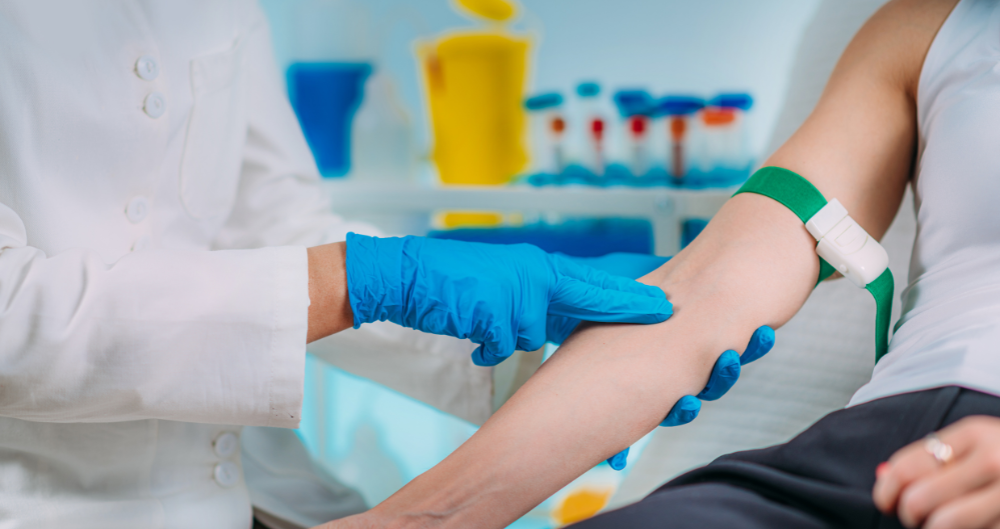
A phlebotomist draws blood for tests, transfusions, and donation, and keeps patients steady through the process. If you are still weighing the role, our guides on what a phlebotomist does and what phlebotomy is cover the day to day.
Across the Inland Empire, phlebotomists work in hospitals, diagnostic labs, blood donation centers, and outpatient clinics. Major health systems in the area include Loma Linda University Health, Kaiser Permanente, Arrowhead Regional Medical Center, and Riverside University Health System, and national labs such as LabCorp and Quest Diagnostics operate collection sites throughout both counties.
Frequently Asked Questions
Which pays more, EKG or phlebotomy?
Entry-level pay for the two roles is fairly close, so the choice usually comes down to which work you prefer and what is available near you. In the Riverside-San Bernardino-Ontario area, phlebotomists earn a median of $51,490. Some students train in both skills, which is why combined phlebotomy and EKG programs are common.
Is phlebotomy harder than CNA?
Most people find phlebotomy a narrower skill set than becoming a CNA. Phlebotomy focuses on drawing blood and handling samples, and California's standard training route runs about 80 hours, split between 40 classroom and 40 clinical. California's CNA training requires more hours, including more supervised clinical time. Which one feels harder depends on you and the kind of work you want.
What is the shortest phlebotomy course?
The shortest option is usually a self-paced online program, where you can move through the coursework quickly if you study full time. The in-person program featured here runs 6 weeks, and other programs vary. Whatever the format, you still have to complete the state's required clinical hours and pass the certification exam, so the externship and exam set the true finish line, not just the coursework.
Building Your Phlebotomy Career in the Inland Empire
California's certificate rule is the part that catches people off guard, so the smartest move is to choose a program that builds in the clinical hours and venipunctures the state counts, then keep the annual renewal in mind once you are certified. A program that only teaches the coursework leaves you short of what the CPT I certificate actually requires.
Compare San Bernardino and Riverside phlebotomy programs on Dreambound by format, schedule, and cost, and start with one that includes a local externship.