Medication Aide Training Cost: Cheapest and Fastest Programs in 2026
See if you qualify for Medication Aide programs
Answer a few questions in 2 minutes. Free, no commitment.
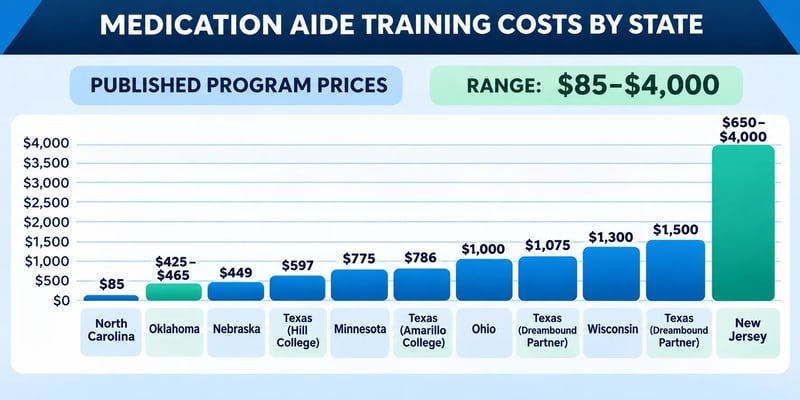
Medication aide training cost runs about $450 to $1,300 at most state-approved programs, though one North Carolina community college course comes in under $150 and some funded seats are free. Plan for state exam and certification fees on top, from $25 in Texas to $120 in Virginia, plus a background check and supplies.
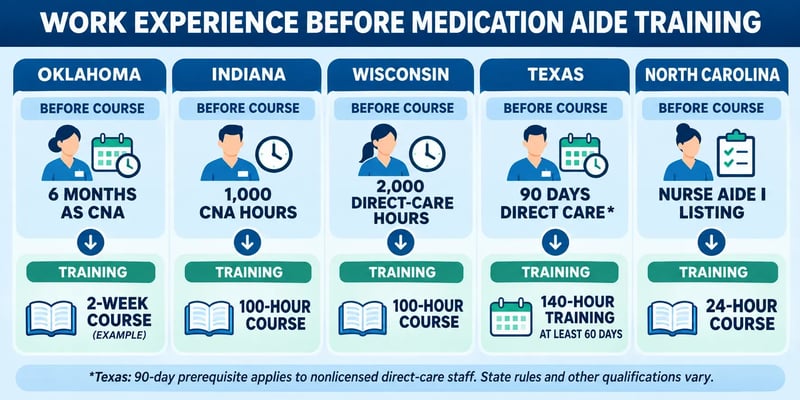
The fastest courses take about two weeks of full-time class, while Texas requires 140 hours and a facility training program must last at least 60 days. In most states, the bigger time cost comes before class, since you usually need an active CNA listing and sometimes months of work experience. BLS counts medication aides with nursing assistants, who earned a median of $42,260 in May 2025. No state we checked offers a fully online first certification, because each one requires supervised medication practice in person.
Medication Aide Salary and Job Outlook
BLS doesn't publish a separate wage for medication aides. It counts them as nursing assistants, and O*NET lists Certified Medication Aide among that occupation's job titles. Nursing assistants earned a median of $42,260 a year in May 2025, with the lowest 10% under $33,940 and the highest 10% above $51,980.
Job postings that name the role run a little lower. ZipRecruiter puts the medication aide average at $37,953 a year (October 2026), and Indeed shows $19.26 an hour (August 2026).
Setting matters, too. Many medication aides work in assisted living, where nursing assistants earn a lower median, $39,490, than in skilled nursing facilities at $43,000 or government at $47,050. In Texas, home to both Dreambound partner programs, the nursing assistant median was $37,500 in May 2025. Among the states in the cost table, New Jersey ($46,830) and Minnesota ($46,680) paid the most, while Oklahoma ($35,930) paid the least.
BLS projects 3% growth from 2025 to 2035 for nursing assistants and orderlies, about as fast as average, with about 203,300 openings a year.
Frequently Asked Questions
Is becoming a medication aide worth it?
It can be, especially if you are already a CNA in long-term care and your employer uses medication aides. Training usually costs $450 to $1,300 and takes about two weeks to four months, depending on the state, but pay data doesn't show a steady premium, so ask about a pay differential before you commit. Our look at whether medication aide is a good job weighs the pros and cons in more detail.
What is the cheapest way to become a medication aide?
Employer sponsorship is usually the cheapest route, since some nursing homes and assisted living employers pay the course fee for staff, and grant-funded seats like Rhode Island's cost nothing. If you pay on your own, community and technical college courses tend to cost the least, from $85 plus a book in North Carolina to $597 at Hill College in Texas. Add your state's exam or certification fee of $25 to $120, and compare that total rather than tuition alone.
Can you become a medication aide online?
Not entirely. Several states allow the classroom part online, but every state we checked requires in-person skills and clinical practice for the first certification. Low-cost online "med tech" certificates aren't state credentials, so compare online medication aide classes that include the in-person hours.
Do you need to be a CNA before becoming a medication aide?
In most states, yes. Nursing home medication aide jobs usually require an active CNA listing, and some states add work time, such as six months in Oklahoma and Missouri. Texas offers another route: nonlicensed direct-care staff can qualify with 90 days of work in a facility or home health agency during the year before training, as long as they are employed on the first day of class. Our CNA vs Medication Aide comparison lays out how the two roles differ.
How long is the medication aide program in Texas?
Texas requires 140 hours: 100 hours of classroom instruction, 30 hours of skills lab, and 10 clinical hours. A facility training program must last at least 60 days, with no more than four hours of class a day, and college courses can take longer; Amarillo College's runs a full semester. Our guide on how to become a certified medication aide in Texas covers eligibility step by step.
Choosing a Medication Aide Program That Fits Your Budget
The cheapest medication aide program only pays off if your state approves it and it includes the hands-on hours your certification depends on. The partner programs above cost $1,075 to $1,500, and both are hybrid.
Weigh the full price against the format, confirm the course includes the in-person skills practice your state requires, and make sure it is approved where you plan to work. Compare medication aide programs on Dreambound by total tuition and format to find one that fits your budget and your schedule.