Online Medication Aide Classes: How They Work and Where to Find Them (2026)
See if you qualify for Medication Aide programs
Answer a few questions in 2 minutes. Free, no commitment.
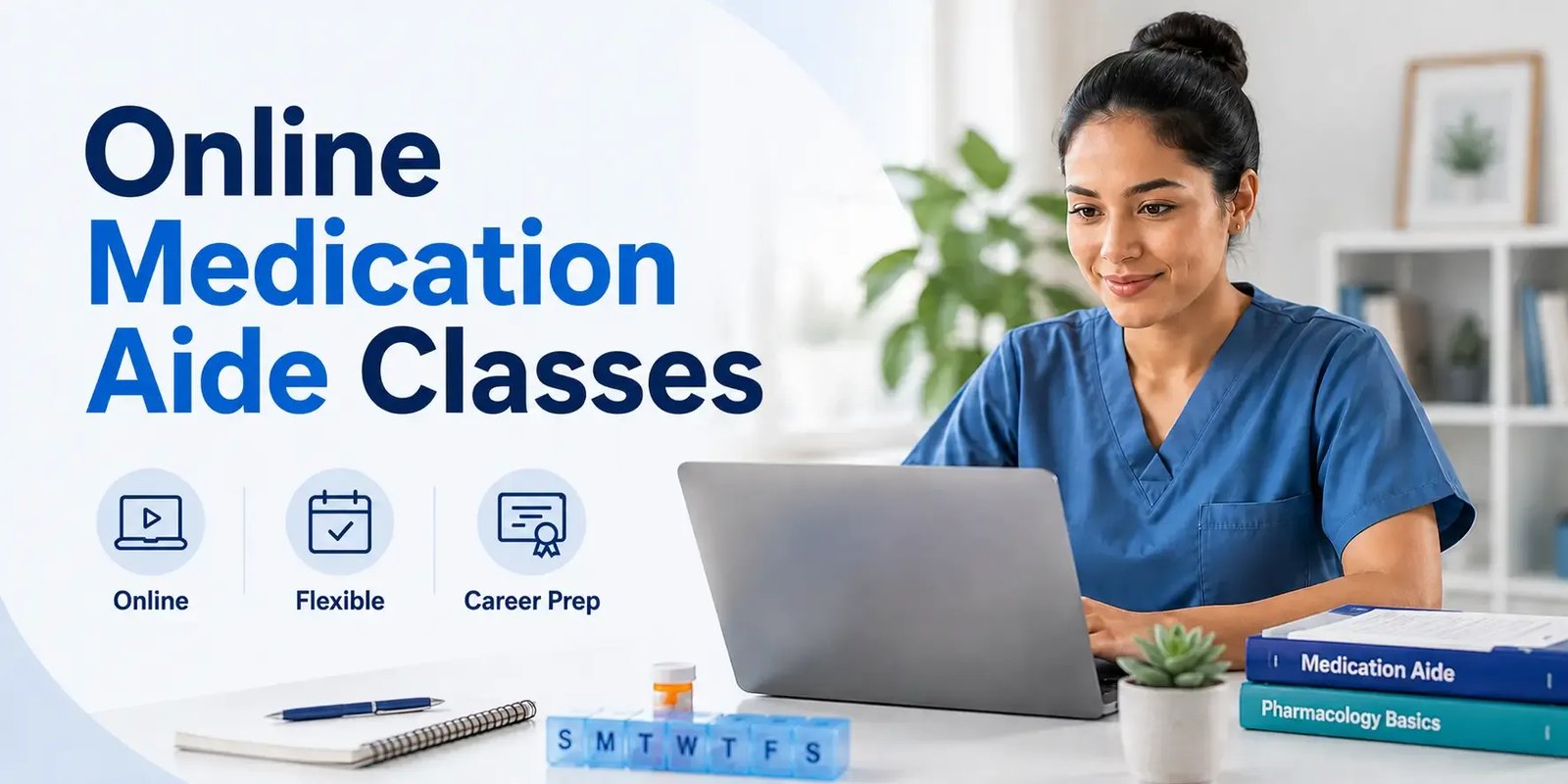
Medication aide classes are offered online, though most run in a hybrid format rather than fully online. The coursework covering medication administration, dosage, and safety is done online, while the required hands-on clinical hours are completed in person at a local facility. Many states also ask for an active CNA credential, nurse aide status, or qualifying direct-care experience before you begin, though the exact prerequisite depends on the state. After training, you pass the medication aide competency exam or evaluation your state requires, since the exam and testing vendor are set by the state agency that regulates the role. Knowing which parts happen online and which happen in person helps you pick a program that fits your schedule and leads to certification.
Are KMA and CMA the same thing?
KMA stands for Kentucky Medication Aide, which Kentucky treats as equivalent to Certified Medication Aide I (CMA I). Other states use different names for a similar role, such as Certified Medication Technician (CMT), Qualified Medication Aide (QMA), or Medication Aide-Certified (MA-C). Titles and levels are set by each state, so they are not identical everywhere.
Do you need to be a CNA before becoming a medication aide?
Often, but not always. Many states require an active CNA credential, nurse aide status, or qualifying direct-care experience before medication aide training, while some allow other routes. The exact prerequisite depends on the state, so confirm it with your state board of nursing.
How long do medication aide classes take?
Most programs take a few weeks to a few months. Training length varies widely, from around 20 hours for some medication technician programs to 140 hours in states such as Texas, and part-time or hybrid schedules stretch that timeline. The clinical hours you complete in person are part of the total.
What is the highest pay for a medication aide?
The national median is $39,530 per year, according to May 2024 BLS data, and top earners make more than that figure. Pay tends to be highest for aides with more experience, those working in higher-cost states, and those in specialized long-term care settings. Browse medication aide programs on Dreambound to compare options that fit your goals.
Do medication aide certifications transfer between states?
Not automatically. Because each state sets its own training and exam standards, a certification earned in one state may not be honored in another. Some states offer reciprocity or a path to convert an existing credential, so check the destination state's board of nursing before you move.
Choosing a Medication Aide Program That Fits You
The most important thing to confirm before you sign up is how a program is actually delivered. A medication aide course can put its lectures online, but the clinical hours and, in many states, the CNA, nurse aide, or direct-care prerequisite behind them keep the path from being fully remote. Knowing that up front helps you pick a program that leads to real certification rather than one that stops short.
From there, the choice comes down to your state's rules, your schedule, and the format that works for you. Compare medication aide programs on Dreambound to see how cost, format, and training length differ, and find one that matches where you are starting from.