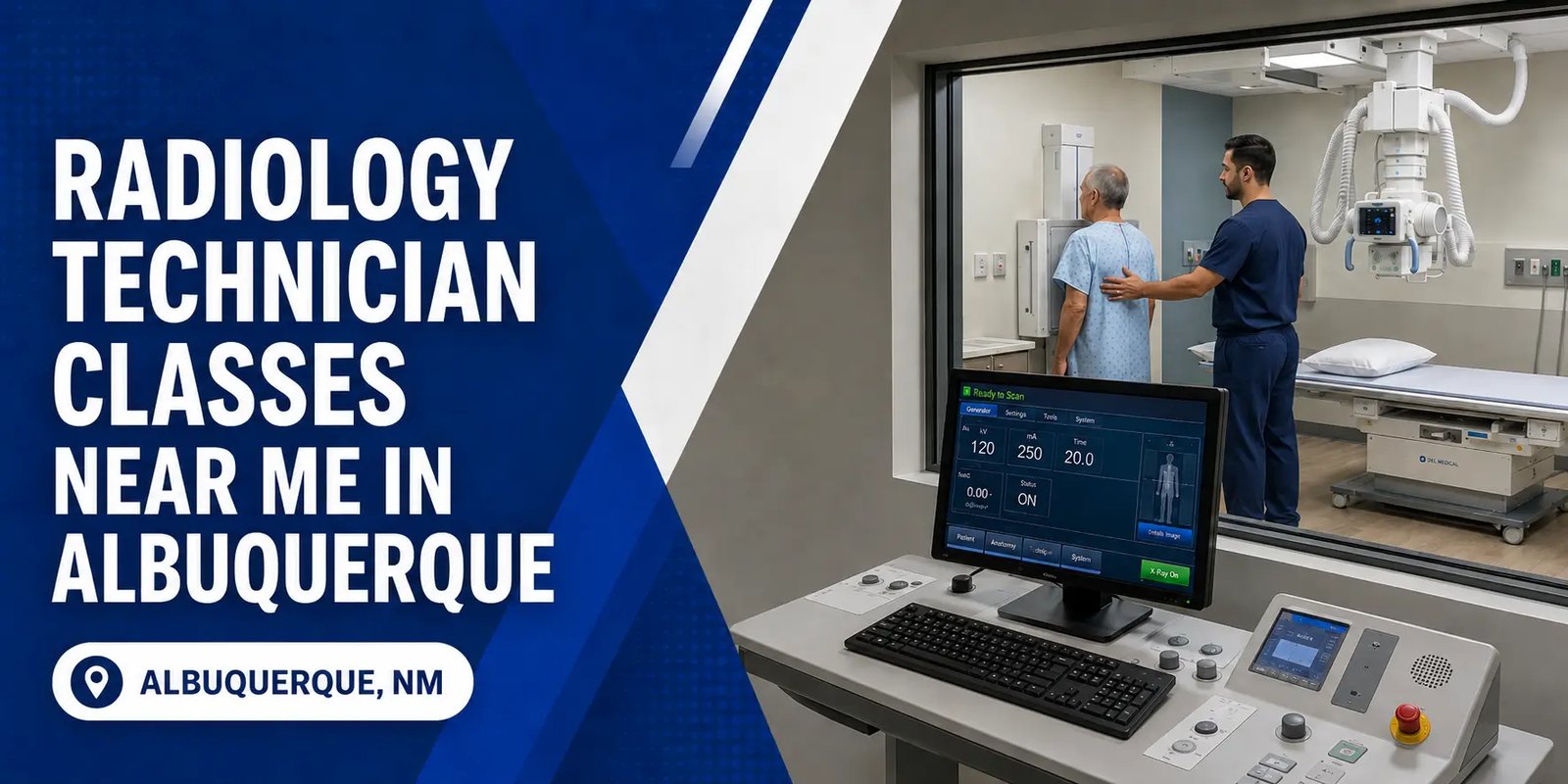
Radiology Technician Classes Near Me in Albuquerque
New Mexico regulates radiologic technologists through its Environment Department, licensing radiographers as medical imaging professionals rather than through a health or medical board. May 2025 BLS data puts the median wage in the Albuquerque metro at $79,940 a year, or $38.44 an hour. The standard route is to finish an ARRT-approved radiography program, earn ARRT certification, and apply for the state license. New Mexico also grants a one-time temporary license that lets qualifying graduates work before the national exam. Training usually takes about two years, and knowing how the state handles licensing before you pick a program keeps your plan on track.
Key Points
- New Mexico licenses radiographers as "medical imaging professionals" through the Environment Department's Radiation Control Bureau.
- The standard license requires ARRT certification; ARRT eligibility means an associate degree or higher plus an ARRT-approved radiography program.
- New Mexico also offers a one-time temporary license that lets qualifying graduates work before the national exam.
- Radiologic technologists in the Albuquerque metro earn a median of $79,940 a year, based on May 2025 BLS data.
- Licenses renew every two years, with a current minimum renewal payment of $110, and you keep them current by maintaining your ARRT credential.
New Mexico Radiology Technician License Requirements
New Mexico requires a state license to work as a radiologic technologist, and it handles the credential differently from most states. The license comes from the New Mexico Environment Department Radiation Control Bureau under the Medical Imaging and Radiation Therapy Act, and radiographers are licensed as medical imaging professionals.
To obtain a regular license, you hold current ARRT certification and registration in Radiography. ARRT eligibility requires an associate degree or higher plus completion of an ARRT-approved radiography program, so in practice you finish an approved program, pass the ARRT exam, and apply to the state. Licenses renew every two years, with a current minimum renewal payment of $110, made up of a $100 biennial licensure fee and a $10 application fee.
New Mexico also grants a one-time temporary license to qualifying graduates. If you apply within a year of finishing an approved program and meet the other requirements, it lets you practice before taking the national exam. It lasts up to 12 months, cannot be renewed, and is granted only once.
Radiologic Technology Programs Near Albuquerque
Radiography training near Albuquerque commonly leads to an associate degree and takes roughly two years once prerequisites and the professional coursework are included. When you compare programs, confirm the program is ARRT-approved and that you will meet ARRT eligibility, since your New Mexico license depends on ARRT certification. Fully online radiography programs are uncommon: some coursework may be online, but the supervised clinical education and competencies must be completed in person on real equipment.
Dreambound lets you compare radiology technician programs by format and location, so you can line up what is available near you and see which ones fit your schedule.
Radiology Technician Salary in Albuquerque
Radiologic technologists in the Albuquerque metro earn a median of $79,940 a year, or $38.44 an hour, according to May 2025 BLS data. Pay varies with the employer, work setting, and years of experience.
Nationally, employment is projected to grow 4% from 2024 to 2034. Major healthcare employers across the Albuquerque area include the University of New Mexico Hospital, Presbyterian Healthcare Services, and Lovelace Health System.
Radiology technology is also one of the programs people save most when they explore healthcare training on Dreambound. It entered the platform's five most-saved programs for the first time in 2025, ranked fourth with 1,126 saves in the 2025 Student Choice and Interest Report. That reflects how often people comparing training options on the platform put radiology technology on their shortlist.
If these numbers fit your plans, compare radiology technician programs near you on Dreambound by format and location.
How to Become a Radiology Technician in Albuquerque
Becoming a licensed radiology technician in New Mexico follows four main steps.
- Earn a high school diploma or GED, and complete the prerequisites your chosen program requires.
- Complete an ARRT-approved radiography program, usually a two-year associate degree with supervised clinical rotations.
- Pass the ARRT certification exam in radiography.
- Apply to the New Mexico Environment Department for your medical imaging professional license.
Most students finish in about two years of full-time study. Qualifying graduates can apply for the one-time temporary license to start working before the exam, then move to the regular license once they are ARRT-certified.
Frequently Asked Questions
Who is exempt from New Mexico's radiology technician license?
The Medical Imaging and Radiation Therapy Act exempts some groups, including physicians and other licensed practitioners performing imaging within their own scope, and students completing approved clinical education under supervision. Outside those exemptions, a person practicing as a radiographer must hold the New Mexico license.
Does New Mexico set its own continuing education for radiology techs?
New Mexico does not impose a separate continuing-education total on fully licensed radiographers. Instead, you stay compliant with the continuing-education, continuing-competency, and registration requirements of your credentialing organization, which for radiography is ARRT. Keeping your ARRT credential in good standing is what keeps your New Mexico license current.
Can you complete radiography clinical training at Albuquerque hospitals?
Albuquerque-area programs arrange supervised clinical education through affiliated hospitals, clinics, and imaging centers. Large systems like UNM Health, Presbyterian, and Lovelace run the kind of imaging services programs use, though placements vary by program and can include sites outside Albuquerque. Confirm current clinical locations and any travel with your program.
Can an ARRT-certified technologist from another state get licensed in New Mexico?
Yes. ARRT certification is a national credential, so an ARRT-certified and registered radiographer moving from another state can apply for a New Mexico license. An out-of-state license on its own does not replace the New Mexico application through the Environment Department.
Planning Your Radiology Technician Path in New Mexico
New Mexico's setup is the piece most "near me" searches skip: the license comes from the Environment Department, not a health board, and it rides on your ARRT credential rather than a separate state exam or continuing-education tally. Sorting out that pathway before you pick a program keeps your training aligned with what the state actually requires.
Radiology technology continues to draw strong interest among people weighing healthcare training. Compare radiology technician programs near you on Dreambound by format and location to find one that fits your schedule and the ARRT-based path New Mexico expects.