
About
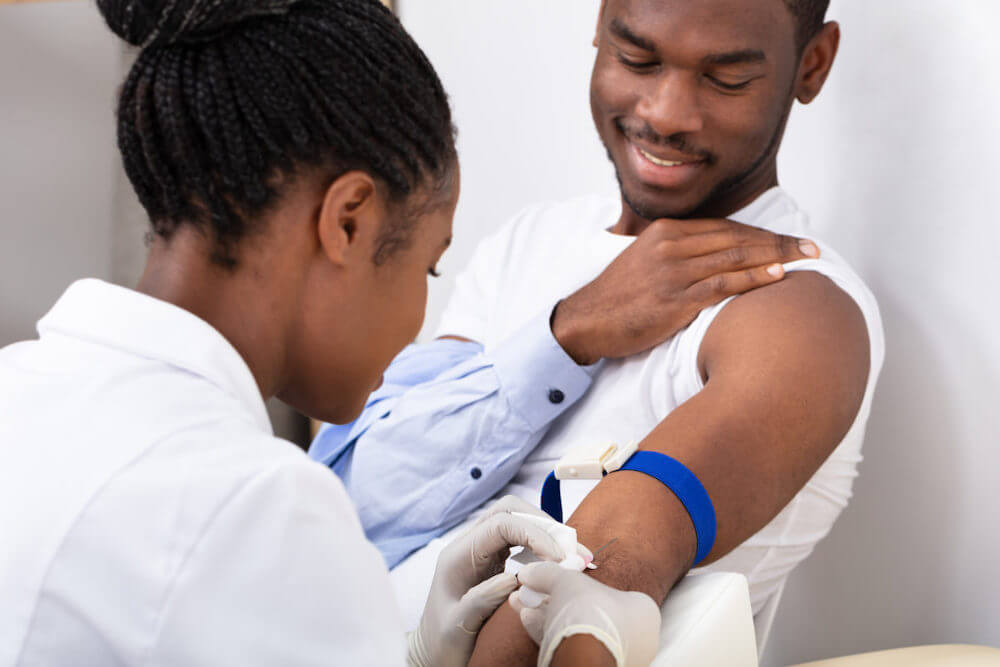
Phlebotomy technicians, or phlebotomists, are medical technicians trained to draw blood accurately and correctly. The job involves both patient laboratory work and clinical care.
Phlebotomy technicians work in hospitals, physician offices, group practices, independent laboratories, health maintenance organizations and public facilities.
Duties of a phlebotomy technician may include:
-
drawing blood
-
preparing specimens for storage or testing
-
assembling equipment
-
verifying patients’ records
A phlebotomist may also interview and screen donors at a blood bank.
The phlebotomist is a vital member of the clinical laboratory team, whose main function is to obtain patient’s blood specimens by venipuncture and micro collection.
They usually work under the supervision of medical technologists or laboratory managers.
Phlebotomists are employed throughout the health care system – hospitals, neighborhood health centers, medical group practices, HMOs, public health facilities, veterans’ hospitals, insurance carriers and in other health care settings.
The field of phlebotomy has greatly expanded in the past several years, and the role of this integral member of the health care team has recently been brought into much sharper focus.
Our classes provide you with skills and knowledge in both the technical and procedural aspects of basic phlebotomy, including collection of blood specimens and venipuncture.
In addition, the clinical phase allows you to gain hands-on experience in local facilities.
Students who successfully complete Phlebotomy Essentials and the Phlebotomy Clinical are eligible to take the American Society for Clinical Pathology (ASCP) certification, demonstrating their ability to carry out their responsibilities in this critical profession.
Organization
Dallas College - El Centro Campus
Dallas College
Dallas College is a unified institution with seven campuses, offering diverse high-demand career programs and affordable education focused on student success. Its mission is to transform lives and communities through higher education, providing accessible opportunities for all students.
Highlights:
- Unified institution with seven campuses
- Offers diverse high-demand career programs
- Affordable education focused on student success
- Mission to transform lives and communities through higher education
- El Centro Campus was first to offer a nursing program
- El Centro Campus has established relationships with top-ranked hospitals in Dallas