Top 5 Qualities You Need to be a Successful CNA (Plus Resume Skills)
See if you qualify for Certified Nursing Assistant programs
Answer a few questions in 2 minutes. Free, no commitment.
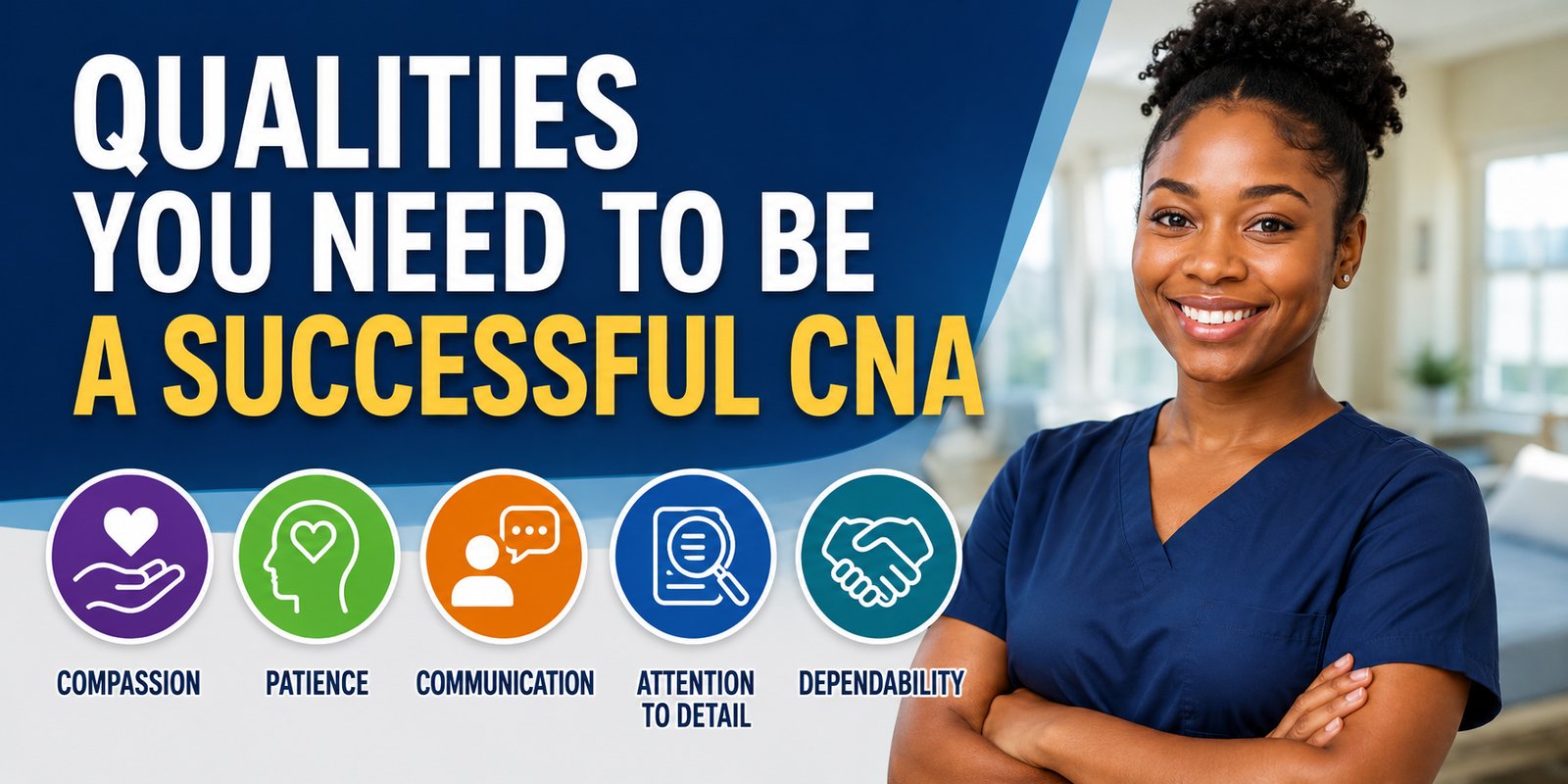
A successful CNA needs more than clinical training. The five qualities that set the best nursing assistants apart are compassion, patience, strong communication, attention to detail, and dependability. Those soft skills sit right next to the hands-on skills you learn in class, and many hiring managers weigh them just as heavily, because they are harder to teach. If you are weighing whether this work fits you, these are the traits worth an honest look, and if you are already applying for jobs, the skills to feature on your resume.
Nurse Aide - Diamond Career Institute
- Format: Hybrid
- Length: 5 weeks
- Tuition: $274 to start, $920 total
- Covers first aid, CPR, vital signs, and infection prevention
Certified Nursing Assistant - Williams Career School of Excellence
- Format: Hybrid
- Tuition: $725 to start, $1,450 total
- No high school diploma or GED required, and you can start at age 16
Frequently Asked Questions
What qualities are most important for a CNA?
Compassion, patience, strong communication, attention to detail, and dependability are the five that matter most. If you had to pick one, compassion tops the list, since the job involves personal, sometimes vulnerable care that depends on trust. The rest keep that care safe, steady, and reliable.
What are the main skills for a CNA?
CNA skills come in two kinds. The hard skills are clinical: taking vital signs, helping with bathing, dressing, and mobility, infection control, and documenting in electronic health records. The soft skills are the qualities above, communication, empathy, patience, and dependability, and employers weigh them just as heavily.
What is the most important responsibility of a CNA?
Keeping patients safe and comfortable. Because CNAs spend the most time at the bedside, the single most important duty is noticing changes in a patient's condition and reporting them to the nurse quickly, while providing daily care with dignity. That mix of attention and care is the heart of the role.
What are a CNA's strengths and weaknesses?
Common CNA strengths are the five qualities here: compassion, patience, communication, attention to detail, and dependability. For the weakness question in an interview, name a real one you are working on, like learning to set boundaries to avoid burnout, and show how you are improving it rather than claiming you have none.
Do You Have What It Takes to Be a CNA?
None of these five qualities require a degree. Compassion, patience, communication, attention to detail, and dependability are things you can already recognize in yourself, and the clinical skills come with training. If you see yourself in this list, you likely have the foundation the job is built on.
When you are ready to take the next step, Dreambound can help you compare CNA programs by cost, length, and format and start where it makes sense for you.