Key Points
- Median pay is $64,650 a year, or $31.08 an hour (BLS OEWS, May 2025).
- The middle half of surgical techs earns about $54,690 to $79,750 a year, from the 25th to the 75th percentile.
- The median across all U.S. occupations is $50,980, so the surgical tech median runs $13,670 higher (OEWS national file).
- Pay shifts with workplace and state, and BLS publishes no pay by surgical specialty.

How Much Do Surgical Techs Make?
Surgical techs made a median of $64,650 a year in May 2025, according to the BLS Occupational Employment and Wage Statistics program, which tracks wages by occupation across the country. Half of surgical technologists earned more than that figure and half earned less.
So how much does a surgical tech make at different pay levels? The table lays out the full national ladder, from the lowest tenth to the highest tenth, in annual and hourly terms.
Source: BLS OEWS national estimates, May 2025, surgical technologists (occupation code 29-2055).
A percentile shows the share of workers who earned less than a given wage. At the 75th percentile, for example, three out of four surgical techs earned less than $79,750 a year. The middle half of surgical techs earned between $54,690 and $79,750, a spread of $25,060.
The distance between the ends of the ladder is larger still. A surgical tech at the 90th percentile earned $51,000 more per year than one at the 10th. That spread is why a single figure never tells the whole story, and why the percentile you are comparing against matters as much as the number itself.
Surgical Tech Hourly Pay
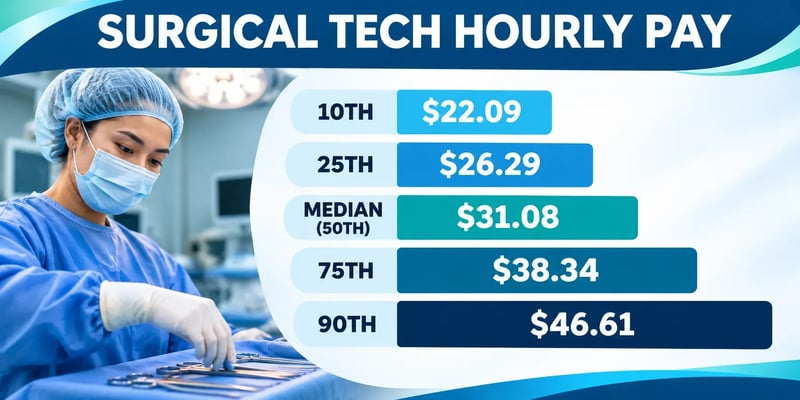
How much does a surgical tech make per hour? The median is $31.08. The surgical tech salary per hour runs from less than $22.09 at the 10th percentile to more than $46.61 at the 90th, a gap of $24.52 an hour between the two ends of the range. A full-time year of 40 hours a week for 52 weeks is 2,080 hours, and $31.08 times 2,080 comes to about $64,650, which lines up with the annual median.
Schedules matter when you compare hourly and annual figures. The BLS Occupational Outlook Handbook notes that surgical technologists working in hospitals may be on call or work nights, weekends, and holidays, and some shifts run longer than 8 hours. What a job pays by the hour and what it adds up to over a year can differ from one workplace to the next.
What Affects Surgical Tech Pay?
Workplace is the clearest pay factor BLS publishes. These are the median annual wages for surgical technologists by industry in May 2025.
Source: BLS Occupational Outlook Handbook, May 2025 industry medians.
Hospitals, outpatient care centers, and physicians' offices sit within $430 of one another. Dentists' offices are the outlier, with a median $16,830 below the hospital figure.
Experience is harder to pin down. BLS does not tie surgical tech pay to years on the job, so there is no official raise schedule to point to. The percentile table above shows how wide the range is, but not what moves a person from one rung to the next.
State pay differs as well. Dreambound's state guides cover how Texas handles surgical tech employment and pay, what New York requires of surgical technologists, and how Colorado registration works for surgical technologists in more detail.
What Do Entry-Level Surgical Techs Earn?
There is no official surgical tech starting salary in BLS data. The closest national benchmark is the lowest tenth of earners, who made less than $45,940 a year, or $22.09 an hour, in May 2025. The lowest tenth is not limited to new hires, so it works as a rough marker for the low end of pay rather than a starting offer. Training time is a separate question, and how long surgical tech training takes covers that timeline.
What Kind of Surgical Tech Makes the Most Money?
BLS reports pay by workplace and percentile, not by specialty, so there is no official ranking of areas such as cardiovascular or neurosurgery. What the data does show is the top of the range: the highest tenth of surgical techs earned more than $96,940 a year, or $46.61 an hour. Among the five workplaces in the table, hospitals had the highest median at $65,020, though four of the five medians sit close together.
Median vs Average: Why Salary Figures Do Not Match
The median is the middle wage, where half of surgical techs earn more and half earn less. The mean, or average, adds every wage together and divides by the number of workers, so high earners pull it upward. In May 2025 the median was $64,650 and the mean was $68,710, a difference of $4,060. Both are accurate, and they answer different questions.
The surgical tech average salary of $68,710 sits above the median because pay at the top of the range stretches farther than pay at the bottom. The 90th percentile is $32,290 above the median, while the 10th percentile is $18,710 below it.
Salary sites and job boards often show different numbers because they differ by source, date, and location. A figure for a single city is a local snapshot, not a national one, so check the date and the place behind any number before comparing it. Every national figure on this page comes from BLS data for May 2025.
Job Outlook for Surgical Techs
BLS projects employment of surgical technologists to grow 5% from 2025 to 2035, or about 5,900 jobs (Occupational Outlook Handbook, updated August 27, 2026). That is a ten-year projection for the occupation as a whole, and it says nothing about hiring in any one city, state, or workplace. If the pay range fits what you want from a job, the national steps to become a surgical tech show what training the path involves.