Key Points
- The median NP salary is $132,300 a year, and the middle half of NPs earn between $117,990 and $156,700, based on BLS data for May 2025.
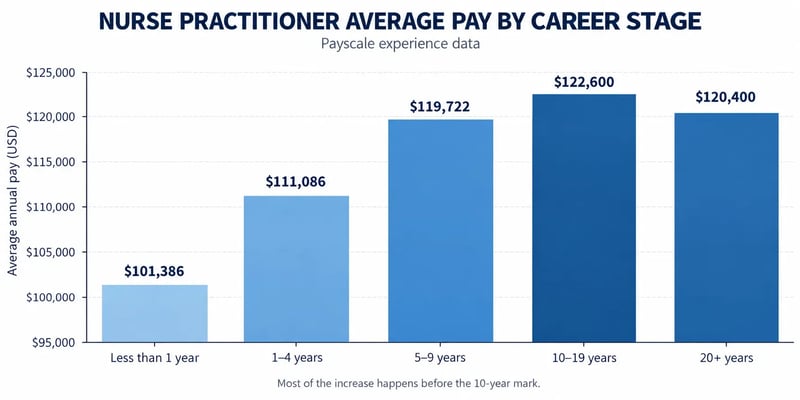
- Self-reported pay on Payscale climbs from about $101,000 in the first year to about $123,000 for NPs with 10 to 19 years, then levels off.
- New NPs can earn less than experienced RNs at first, since the top 10% of RNs earn more than $137,470, which is above the NP median.
- California pays NPs the most, with a median of $168,520, and the 17 highest-paying metro areas for NPs are all in California.
- BLS projects NP employment to grow 41% from 2025 to 2035, with about 29,400 openings a year.

How Much Does a Nurse Practitioner Make?
A nurse practitioner makes a median of $132,300 a year, and the median nurse practitioner hourly wage is $63.61, based on BLS wage data for May 2025. Half of all NPs earn more than that, and half earn less.
Here is how NP pay spreads out nationally, from the lowest 10% of earners to the highest 10%:
These percentiles describe the spread of pay rather than years on the job, because BLS does not collect experience data.
They also leave some income out. The BLS wage survey counts base pay, incentive pay, and production bonuses, but it excludes overtime, shift differentials, and on-call pay. Employer surveys and self-reported salary sites measure pay in their own ways, so it helps to check the source and year behind any NP salary you see.
Demand for NPs is strong. NPs held about 336,300 jobs in 2025, and BLS projects employment to grow 41% from 2025 to 2035, far faster than the 3% average for all occupations. That works out to about 29,400 openings a year.
Nurse Practitioner Starting Salary
Self-reported data puts the typical nurse practitioner starting salary in the low $100,000s. NPs with less than a year of experience report average total pay of $101,386 on Payscale, based on 300 salary profiles, which is almost exactly the BLS 10th percentile of $101,340.
Formal transition programs are still uncommon. About 10% of primary care NPs had completed a postgraduate residency or fellowship, according to a 2022 study in the Journal of the American Association of Nurse Practitioners that used 2018 national survey data. That makes the amount of supervision in a first job worth weighing alongside the salary.
Why Some RNs Take a Pay Cut to Become NPs
An experienced RN can earn more than a new NP, so the move up often starts with a step down in pay. Nationally, the top 10% of registered nurses earn more than $137,470 a year, which is above the NP median of $132,300. Even the RN 75th percentile, $112,350, is higher than what the lowest-paid 10% of NPs earn.
California shows the same pattern at higher numbers. The state's RN median of $140,270 is above what the lowest-paid 10% of California NPs earn ($120,340), and an RN at the state's 90th percentile ($213,320) out-earns three out of four California NPs, whose 75th percentile is $209,350. For RN pay by state and setting, see the registered nurse salary guide.
NPs who made the switch describe the same thing. In a 2020 r/nursepractitioner thread, a Bay Area ICU nurse earning $98 an hour, or $110 with night differential, asked whether any NP job would pay more.
A psychiatric NP replied that new NPs start as novices regardless of their RN experience. The reply described taking a lower-paying first job with close supervision and loan forgiveness, then negotiating much higher pay after about two years.
Another new NP said private practice offers ran $50 to $70 an hour, and that hospital systems were the only employers paying more than RN wages because they tie NP pay to their RN scales.
Some employers soften the drop. In SullivanCotter's 2025 survey of advanced practice provider (APP) pay, 33% of organizations said they credit RN experience when setting pay for advanced practice registered nurses (APRNs).
Loan Repayment in Your First Years
If you are willing to work in a shortage area, federal loan repayment can be worth more than a slightly higher salary.
The National Health Service Corps (NHSC) Loan Repayment Program pays NPs up to $75,000 for two years of full-time work, or up to $37,500 for half-time, at an approved primary care site in a Health Professional Shortage Area. The 2026 cycle has closed, so plan around the next one.
The Nurse Corps Loan Repayment Program pays 60% of qualifying nursing school loans over two years, plus another 25% if you qualify for a third year, for RNs and APRNs who work full time at an eligible facility in a high-need area. Employers help as well: 78% of organizations in SullivanCotter's 2025 survey offered student loan repayment to advanced practice providers.
Mid-Career Nurse Practitioner Pay
Mid-career NPs, those with five to nine years of experience in Payscale's data, report an average base salary of $119,722 across 500 profiles. That is up from about $101,000 in the first year, and most of the experience-related rise in Payscale's figures happens before the 10-year mark.
Employer data for medical groups runs higher. In AMGA's 2026 compensation survey, which covers 2025 pay at 451 medical groups and health systems, median NP compensation was $149,178 in primary care, $147,269 in medical specialties, and $149,614 in surgical specialties. Each of those medians rose between 4.1% and 7.3% from the year before.
The gap comes down to who is counted. AMGA reports what large medical groups and health systems pay, while Payscale reflects NPs who share their salaries online. The BLS median of $132,300 falls between them, so read the three together as a range.
Senior and Top-Earning Nurse Practitioners
NP pay flattens after the first decade. Payscale's experienced group, which covers 10 to 19 years, reports an average base salary of $123,010, and its late-career group, 20 or more years, reports $121,463, slightly lower. Seniority alone adds little after that point, so the highest NP salaries come from other factors.
Location is the clearest one. The top 10% of NPs nationally earn more than $174,420 a year, but in California the 90th percentile reaches $240,830, and the San Jose metro area has a median of $231,560.
Recruited positions show how high offers can go. In AMN Healthcare's 2026 review of 1,293 searches from April 2025 through March 2026, NP positions offered an average starting salary of $180,000, with offers from $90,000 to $342,000.
Here, "starting salary" means the base or guaranteed pay offered at hire, not first-year pay. The jobs were filled through a recruiter, so the figures reflect hard-to-fill roles rather than typical NP pay. NPs were AMN's most requested search for the sixth year in a row.
Skills That Raise Nurse Practitioner Pay
Beyond years on the job, a handful of choices tend to move NP pay the most. Employer surveys and federal program rules point to these:
- Specialty and setting: Organizations in SullivanCotter's 2025 survey ranked specialty as the top factor in setting APP base pay, ahead of experience, and hospital-based specialties saw the largest raises. In AMGA's data, surgical specialty NPs had the fastest growth, at 7.3%.
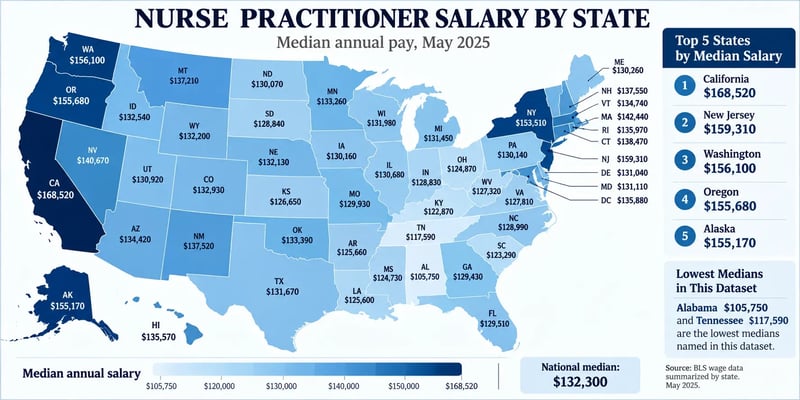
- Location: Moving can raise pay more than a decade of experience. State medians range from $105,750 in Alabama to $168,520 in California, a gap of $62,770.
- Extra shifts and call: Because BLS leaves out overtime, shift differentials, and on-call pay, NPs who pick up extra shifts or take call can earn more than the BLS figures show. Job postings collected by Indeed show average NP overtime of $18,750 a year.
- Spanish-language care: The NHSC adds a one-time $5,000 to its loan repayment award for clinicians who pass its Spanish proficiency assessment and serve Spanish-speaking patients.
Timeline to the Next Nurse Practitioner Pay Bracket
The usual route to becoming an NP takes at least six years of college, a four-year Bachelor of Science in Nursing (BSN) plus at least two years of graduate study, and the biggest raises after that come within the first decade. The path looks like this:
- Earn a BSN and pass the NCLEX-RN to get your RN license. BLS notes that an RN license is required before APRN education, and bridge programs exist for RNs who hold an associate degree.
- Complete a graduate NP program. A master's takes at least two years of full-time study after a BSN, and a Doctor of Nursing Practice takes three to four years, according to Explore Health Careers, in a profile reviewed by the American Association of Colleges of Nursing.
- Pass a national certification exam in your population focus, such as family or psychiatric-mental health, and apply for your state APRN license.
If you are still at the first step, Dreambound's guides to BSN programs near you and graduate nursing programs list programs by location, so you can see what is offered where you live.
Once you are licensed, Payscale's self-reported figures show how pay builds with experience:
Payscale reports total pay for the first two stages and base salary for the last three, from profiles updated in June and July 2026.
Most of the rise comes early. Average total pay climbs about $9,700 from the first year to the one-to-four-year range, and pay keeps climbing through mid-career before leveling off around the 10-year mark. Employers do weigh time in the role: 70.3% of organizations in SullivanCotter's survey factor experience into APP base salary.
After about a decade, though, a new specialty, setting, or location tends to do more for pay than another year in the same job.
Nurse Practitioner Salary by State
California pays nurse practitioners the most, with a median of $168,520 a year, or $81.02 an hour. New Jersey ($159,310), Washington ($156,100), Oregon ($155,680), and Alaska ($155,170) round out the top five, while Alabama has the lowest median at $105,750, followed by Tennessee at $117,590.
Twenty states and the District of Columbia have NP medians at or above the national figure of $132,300. The table below lists every state alphabetically, using BLS May 2025 wage data published through O*NET's local wage tool.