Key Points
- A bachelor's in adult education focuses on teaching adults, with coursework in adult learning theory, instructional design, and program planning.
- BLS lists a bachelor's degree as the typical entry-level education for adult basic and secondary education and ESL teachers.
- Public school roles usually add a teaching license or certificate, and some states offer certificates specifically for adult education.
- These teachers earned a May 2025 median of $61,540, though BLS projects a 14% decline in jobs from 2025 to 2035.
- Non-licensure online programs fit workplace training, curriculum design, and community education better than licensed classroom roles.
What Is the Field of Adult Education?
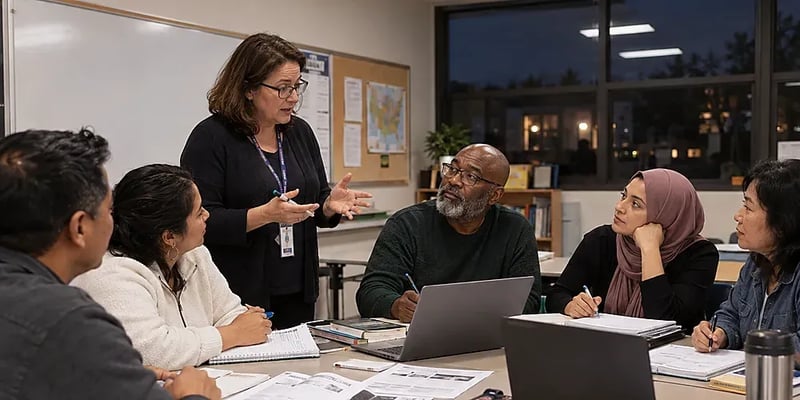
Adult education serves adults and older teens, generally 16 or older, who want to strengthen basic skills, earn a high school equivalency credential, or learn English. BLS describes adult basic education classes as teaching reading, writing, and math, while adult secondary education classes prepare students for a high school equivalency test. ESL classes teach students to read, write, and speak English.
Federal grants support many of these programs. The U.S. Department of Education's adult education and literacy office runs a formula grant program to states under the Adult Education and Family Literacy Act, which is Title II of the Workforce Innovation and Opportunity Act. Those programs help adults build skills such as reading, writing, math, and English language proficiency.
Adult Education Degree vs. Adult Degree Completion
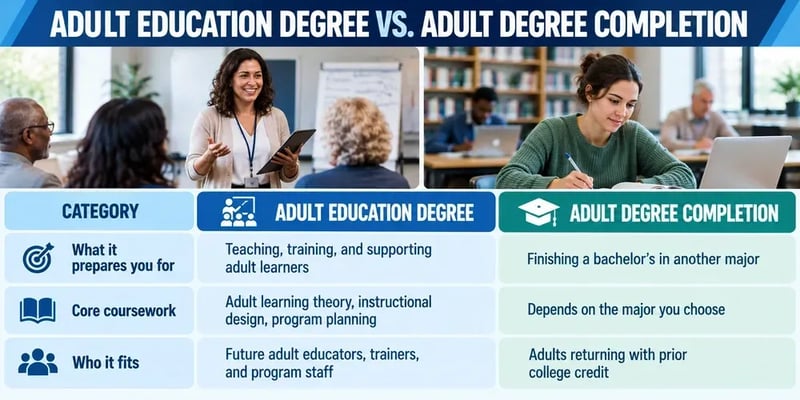
People often mix up these two kinds of programs, so separate them before you compare. An adult education degree trains you to teach and support adult learners. An adult degree completion program lets an adult student finish a bachelor's in a field such as psychology or business, often using credits earned years earlier.
Coursework in an Adult Education and Training Degree
Many programs open with adult learning theory, including andragogy, the study of how adults learn differently from children. Later courses turn to instructional design, assessment, and program planning, plus educational technology for online and blended classes. The University of Arizona Global Campus (UAGC) instructional design program listed later in this guide, for example, names learning theory, assessment, adult learning, and virtual collaboration among its courses.
Electives or a concentration let you lean toward the setting you have in mind, whether that's ESL instruction, workplace training, or community programs. Depending on the school, you may also finish with a practicum or capstone.
Do You Need a License to Teach Adult Education?
In public programs, usually yes. Public school teachers typically need at least a bachelor's degree and a license or certification, according to BLS, and licensing generally requires a student-teaching program. Some states have certificates specifically for adult education, while others require a certificate in elementary or secondary education.
Settle the licensure question before you compare schools. A non-licensure degree can still lead to training, curriculum, and community roles, but it won't qualify you for a licensed public classroom by itself.
Community colleges are a separate case, since some of them prefer to hire instructors with a master's degree or graduate coursework in adult education or ESL, according to BLS.
Adult Education Teacher Salary and Job Outlook
BLS reports that adult basic and secondary education and ESL teachers earned a median of $61,540 a year, or $29.59 an hour, in May 2025. Pay varies by employer, as the table shows.
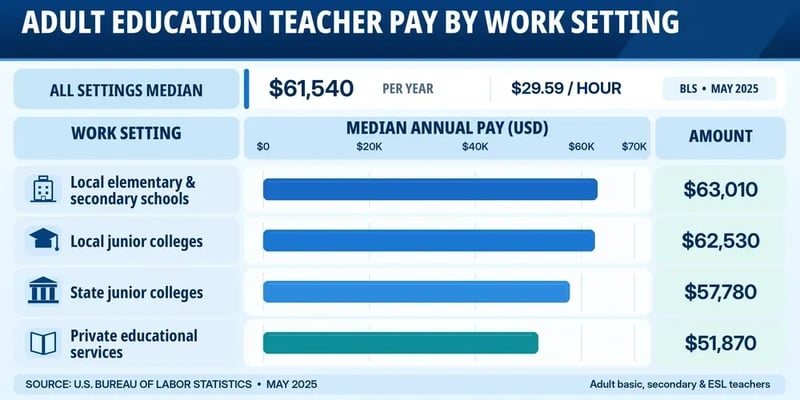
Local elementary and secondary schools employ 31% of these teachers. Private educational services account for 17%, and local and state junior colleges another 25% combined.
Why BLS Projects a 14% Decline
The outlook is the main caution for this degree. BLS expects employment to fall 14% from 2025 to 2035, pointing to a drop in the number of students in adult education and ESL programs and fewer adults expected to pursue high school equivalency credentials. Changes in government funding may also affect demand.
About 3,800 openings a year are still projected, mostly to replace teachers who move into other occupations or leave the labor force. Your design and training coursework also gives you options outside this BLS category, such as workplace training and instructional design.
Online Adult Education Degree Programs
Licensure still matters when you study online. The programs below don't lead directly to licensure, so they fit training and curriculum goals better than a licensed public classroom. A shorter credential can also come first, and our guide to the cheapest and fastest adult education and training programs compares those options.
Dreambound is a marketplace for training and degree programs, and each Adult Education program it lists links to a page with the school’s own details.
Current listings on Dreambound include:
The University of Arizona Global Campus
Program:
Both programs are offered online, with 5-6 week classes taken one at a time and a $0 application fee. Neither leads directly to licensure, which makes them a better match for training and curriculum roles than for a licensed public school classroom.